
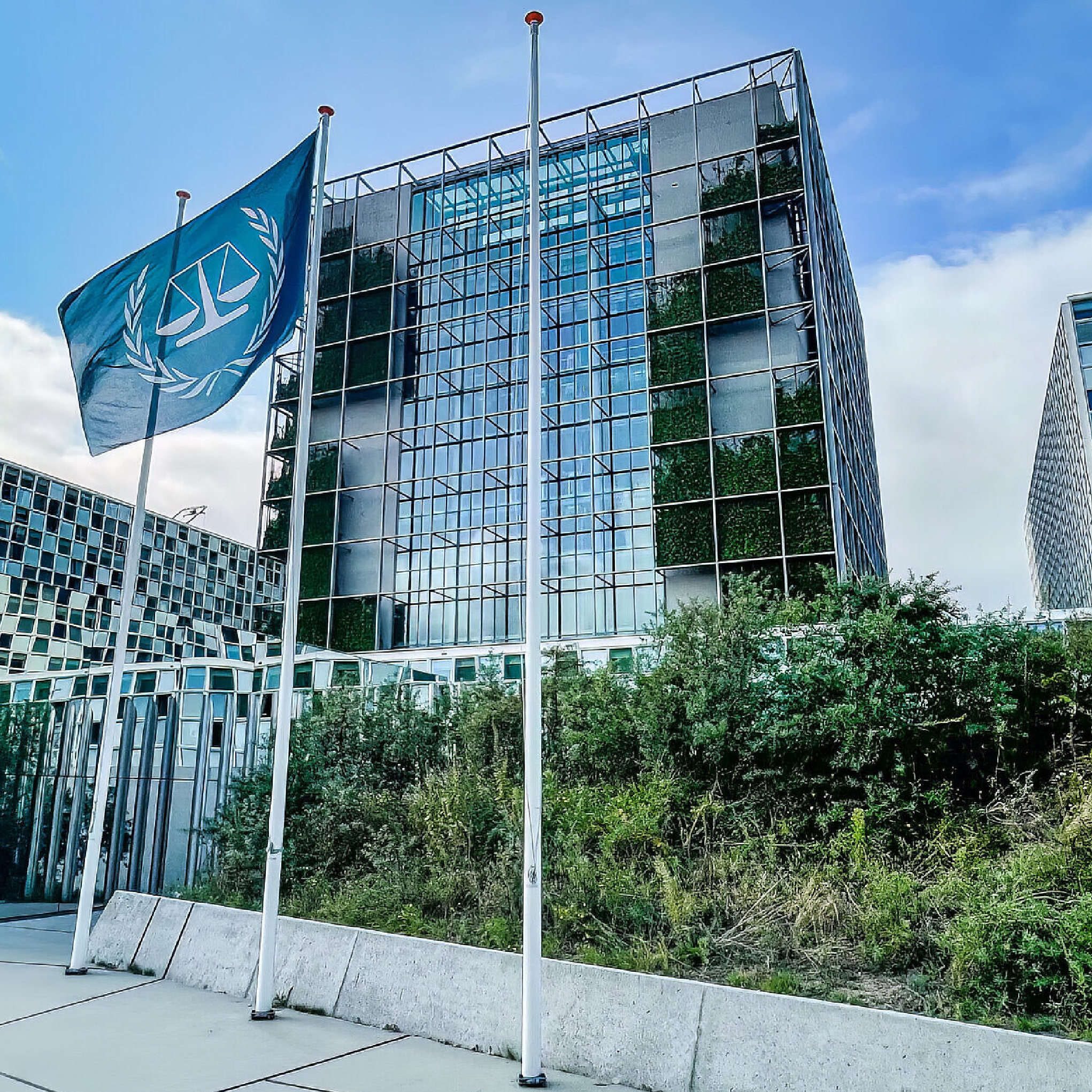
Truth Hounds has recently submitted our recommendations to the ICC Office of the Prosecutor’s Draft Policy on Environmental Crimes under the Rome Statute. As the international legal framework evolves to address environmental harm in conflicts, it is essential to ensure stronger accountability for those responsible for environmental destruction.
Our submission draws on extensive documentation of war crimes and environmental damage, including insights from our research on the destruction of the Kakhovka Dam which we studied in collaboration with our colleagues from Project Expedite Justice.
Key areas we focused on in our submission:
Defining Environmental Crimes
Strengthening legal interpretations of “widespread, long-term, and severe” damage, while also proposing refinements to the definition of the natural environment to better reflect ecological realities.
Jurisdiction & Legal Framework
Addressing transboundary environmental harm under the Rome Statute, emphasizing the role of international environmental law in interpreting crimes against the environment.
Rome Statute & Environmental Destruction
Expanding the discussion on Article 8(2)(b)(iv) and its application, as well as reinforcing the relevance of pillage and resource exploitation as war crimes that frequently result in environmental harm.
Corporate Accountability
Advocating for broader prosecutorial strategies against individual corporate officers involved in environmental crimes.
Investigative Strategies
Strengthening methods for documenting environmental destruction, including AI-driven remote sensing, hydrological and geological analysis, and forensic environmental science.
This submission was prepared with contributions from the following individuals:
- Rohit Gupta, Foreign Legal Expert at Truth Hounds, Ph.D. Candidate in International Criminal Law at the Institute for International Peace and Security Law at the University of Cologne, Fellow at the Centre for International Law Research and Policy in Florence, Italy.
- Volodymyr Hryshko, Senior Legal Counsel at Truth Hounds, Ph.D. Candidate in International Law at the National University of the Kyiv-Mohyla Academy, member of the international advisory council of the Prosecutor’s General Office of Ukraine.
- Andrii Latsyba, Legal Counsel at Truth Hounds.
- Dmytro Koval, Co-Executive Director at Truth Hounds, Ph.D. in International law, Associate Professor at the National University of the Kyiv-Mohyla Academy, member of the international advisory council of the Prosecutor’s General Office of Ukraine.
With the involvement of other legal experts who provided valuable insights and analysis to strengthen the submission.
The ICC has a historic opportunity to set a precedent for prosecuting environmental crimes, reinforcing international humanitarian and criminal law protections for the environment. By incorporating these recommendations, the OTP can enhance legal clarity, promote accountability, and contribute to the broader development of international law on environmental destruction. As environmental harm continues to be a tool of war and conflict, ensuring effective legal responses is both a legal and moral imperative.