
H.E. Mr António Guterres
United Nations Secretary-General
United Nations
New York, NY 10017
21 September 2024
Dear Mr Secretary-General,
As we write to you, civilians are being systematically targeted and killed by the Russian Federation throughout Ukraine. We are a group of Latin Americans and Ukrainians who jointly wish to raise our voice in protest against this monstrous violation of the United Nations Charter by a permanent member of the Security
Council.
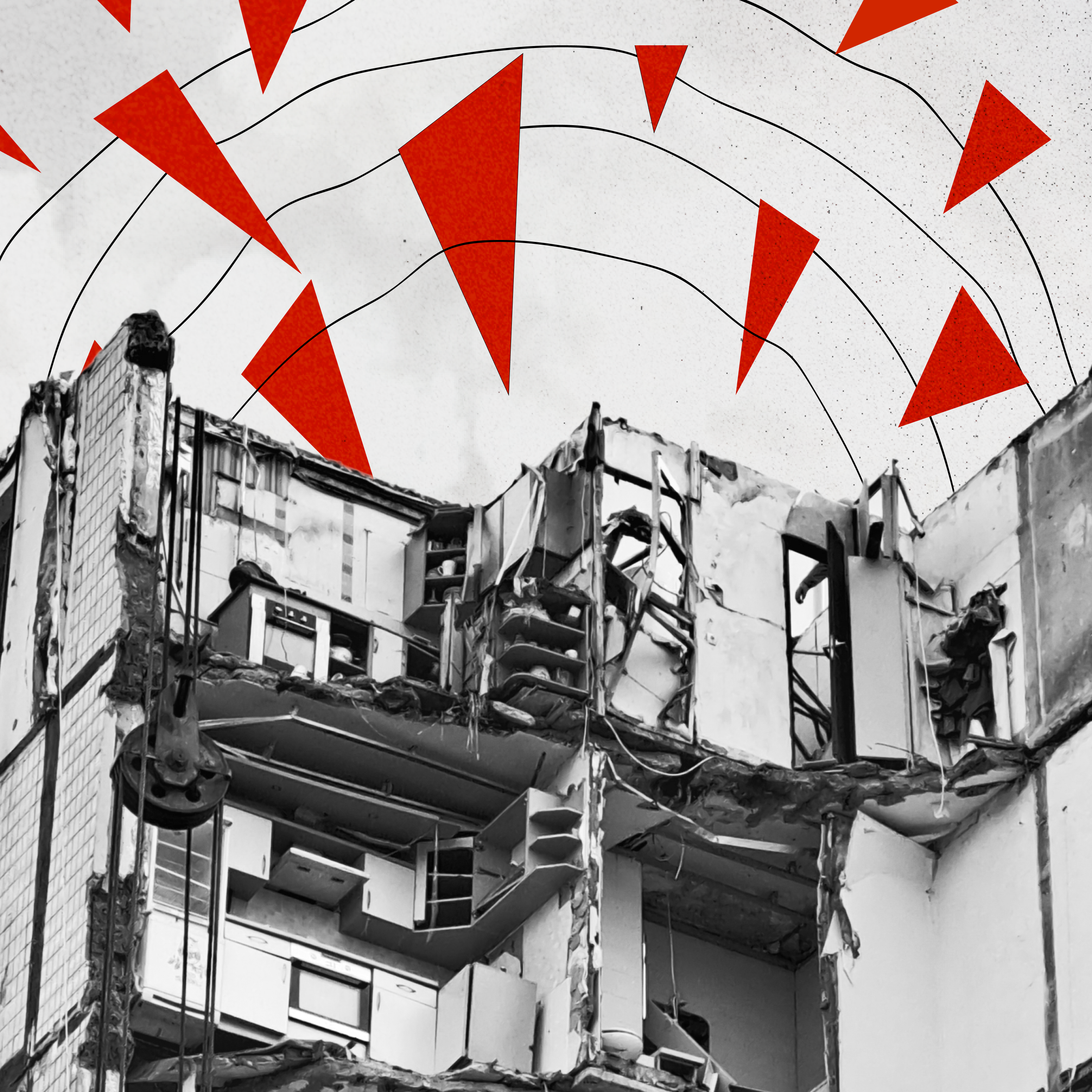
Night after night, missiles and glide bombs rain on Ukrainian cities with no other purpose than to kill and terrorise the population. According to the latest report of the Independent International Commission of Inquiry on Ukraine (March 2024), “attacks with explosive weapons in populated areas remain the leading cause of
death and injury among the civilian population in Ukraine”. The Commission’s figures show that fully 84% of the 10,582 civilian deaths in Ukraine (as of 15 February 2024) are caused by such attacks. This is not a coincidence, but evidence of a criminal pattern of behaviour.
Examples abound. In a single attack on a café in Hroza, in October 2023, 59 people were killed, including 36 women. The report on the massacre of the Office of the United Nations High Commissioner for Human Rights states that “OHCHR has reasonable grounds to believe that there were no military personnel or any
other legitimate military target present at or in proximity to the reception at the café that followed the funeral held at the cemetery outside the village”.
In another attack in June of last year in Kramatorsk (which some of us witnessed), a pizza restaurant was destroyed by an Iskander missile, killing 13 people, including the great writer Victoria Amelina, and injuring 64. And as Victoria was being laid to rest a week later in her home city of Lviv more than 1000 km from the
front, a residential building nearby was struck by a Russian missile, killing 10 and injuring 48.
Week after week, Ukraine suffers such savage attacks. Just recently, another Iskander missile struck a hotel in Kramatorsk, killing a member of a Reuters team and severely injuring others. According to OHCHR figures, July and August have been the deadliest months in two years. Hence the urgency.
The fact that civilians have been killed in virtually every oblast of Ukraine, as shown by OHCHR maps, also shows that the attacks have little to do with the conduct of military hostilities. Rather, they are part and parcel of a campaign to terrorise the entire population of Ukraine.
Nor are civilian objects spared. Hospitals, including children”s hospitals, are destroyed, as happened in Dnipro and Kyiv; libraries and printing houses go up in flames, as happened in Kherson and Kharkiv (Russia has destroyed 138 libraries, according to the Ministry of Culture of Ukraine); a large shopping centre is razed to the ground in the middle of the day by a guided bomb, as happened in Kharkiv in May. Truth Hounds, an organisation that documents war crimes, established that the bomb of this attack was “integrated into the guidance and glide kit with inertial and satellite navigation systems”.
Sometimes the attacks are repeated immediately in what is known as a “double tap” tactic, intended to cause maximum injury. OHCHR documented in its latest report on Ukraine “five instances where high-precision munitions struck the same location or target… twice within a short interval of time, resulting in the death or injury of emergency workers, police officers, paramedics, and other civilian first responders aiding victims of the first impact”.
It is easy to see a pattern and detect a policy in all of these attacks, in line with the definition of crimes against humanity in the Rome Statute: a crime committed “as part of a widespread or systematic attack directed against any civilian population, with knowledge of the attack”.
But what we are witnessing in Ukraine goes beyond the commission of war crimes and crimes against humanity. It is the wholesale disregard of the Geneva Conventions and the Additional Protocols that for so long have afforded civilians the only protection in times of war and are one of the great conquests of humanity.
The Russian Federation’s strategy of deliberate targeting and killing of civilians in Ukraine threatens to turn the entire edifice of International Humanitarian Law into an empty shell, with consequences far beyond Ukraine.
It is true, Mr Secretary, that the corrosion of IHL began long before the full-scale invasion of Ukraine. Scholars locate it in the United States’ conduct of the so-called “war on terror”.
It is also true that appalling war crimes and crimes against humanity are being committed elsewhere as well, as we know from the images of Gaza which we watch with disbelief on our television screens. And then there are the war crimes we cannot see, as in Sudan.
All must be firmly condemned. Ignoring certain violations while denouncing others because of geopolitical preferences contributes to weakening the protection of civilians. Double standards are double standards, regardless of ideology.
As Latin Americans, we feel particularly strongly about this. Latin America contributed significantly to the introduction of the prohibition on the use of force of Article 2.4 of the United Nations Charter and to many other developments of international law and human rights law, such as the codification of the crime of enforced disappearance in the Rome Statute. Having suffered so much ourselves, we believe norms should not be applied selectively.
But it is also true that the Russian Federation presents a special case, because it is a permanent member of the Security Council and as such has been entrusted by all the members of the United Nations with the “primary responsibility for the maintenance of international peace and security”, according to the UN Charter. The Charter also states that “in discharging these duties the Security Council shall act in accordance with the Purposes and Principles of the United Nations” (Art. 24).
Latin America has long drawn attention to the heavy burden of responsibility that comes with being a permanent member. In San Francisco in 1945 at the UN’s founding conference, the Colombian foreign minister and future president, Alberto Lleras, cast the vote of Colombia against granting the power of veto (no other country did so except Cuba) and then pointed out that conferring veto power to the permanent members constituted “an exorbitant proof of confidence from the other countries associated in the United Nations Organisation”.
Exorbitant indeed.
It is this confidence of the community of nations that the Russian Federation has comprehensively betrayed. We therefore kindly ask you to transmit this message to the Security Council and to the General Assembly, and to ask the President of the Assembly to consider whether the Russian Federation should not be suspended from the Assembly, as South Africa was in the 1974, until such time as it behaves in a manner consistent with its responsibilities under the Charter and the expectations of the member states.
Your sincerely,
Antonia Urrejola
Former Minister of Foreign Affairs of Chile Former President of the Interamerican Commission on Human Rights
Diego García-Sayán
Former Minister of Foreign Affairs of Perú Former President of the Interamerican Court of Human Rights
Jorge Castañeda
Former Minister of Foreign Affairs of Mexico
Noemí Sanín
Former Minister of Foreign Affairs of Colombia
Celso Lafer
Former Minister of Foreign Affairs of Brazil
Eduardo Stein
Former Minister of Foreign Affairs of Guatemala Former Vice-President of Guatemala
Gustavo Fernández
Former Minister of Foreign Affairs of Bolivia
Didier Opertti
Former Minister of Foreign Affairs of Uruguay
Erika Mouynes
Former Minister of Foreign Affairs of Panamá
Guillermo Fernández de Soto
Former Minister of Foreign Affairs of Colombia
Alejandro Foxley
Former Minister of Foreign Affairs of Chile
José Antonio García Belaunde
Former Minister of Foreign Affairs of Perú
Oleksandra Matviichuk
Chairwoman, Center for Civil Liberties (Kyiv) Nobel Peace Prize winner
Claudio Grossman (Chile)
Former President of the Interamerican Commission on Human Rights Former President of the United Nations Committee against Torture
Nelson Mandela Award winner
Oleksandr Pavlichenko
Executive Director, Ukrainian Helsinki Human Rights Union (Kyiv)
Juan E. Méndez (Argentina)
Former United Nations Special Rapporteur on Torture
Dmytro Koval
Co-Executive Director, Truth Hounds (Kyiv)
Julissa Mantilla (Perú)
Former Vice-president of the Interamerican Commission on Human Rights
Olena Kravchenko
ICO “Environment – People – Law” (Lviv)
José Miguel Vivanco (Chile)
Former Executive Director, Americas Division of Human Rights Watch
Nataliya Gumenyuk
Founder, The Public Interest Journalism Lab (Kyiv)
Víctor E. Abramovich (Argentina)
Former Vice-president of the Interamerican Commission on Human Rights
Olga Aivazovska
Chair, Civil Network OPORA (Kyiv)
Catalina Botero (Colombia)
Former Special Rapporteur for Freedom of Expression of the Interamerican Commission on Human Rights
René Castro
Former Minister of Foreign Affairs of Costa Rica
Carolina Barco
Former Minister of Foreign Affairs of Colombia
Juan Carlos Holguín
Former Minister of Foreign Affairs of Ecuador
Alfredo Moreno
Former Minister of Foreign Affairs of Chile
Eda Rivas
Former Minister of Foreign Affairs of Perú
Mariano Fernández
Former Minister of Foreign Affairs of Chile
Gert Rosenthal
Former Minister of Foreign Affairs of Guatemala
Ignacio Walker
Former Minister of Finance of Chile
Manuel González
Former Minister of Foreign Affairsof Costa Rica
Rubens Ricupero
Former Minister of Finance of Brazil
Former Secretary-General of the UN Conference on Trade and Development
Sergio Jaramillo
Former High Commissioner for Peace of Colombia ¡Aguanta Ucrania!
Clara Sandoval Villalba (Colombia)
Professor of Human Rights Law, University of Essex;
Director of Programmes, Global Survivors Fund
Kateryna Busol
Professor, National University of Kyiv-Mohyla Academy (Kyiv); Crimean Institute for Strategic Studies
Iván Orozco (Colombia)
Emeritus Professor of Political Science and Human Rights Law, Universidad Nacional de Colombia; Universidad de los Andes
Halia Chyzhyk
Executive Director, Raphael Lemkin Society (Kyiv)
Eduardo Bertoni (Argentina)
Former Special Rapporteur of Freedom of Expression, Interamerican Commission on Human Rights
Kateryna Cherepakha
President, CSO “La Strada-Ukraine” (Kyiv)
José Ugaz (Perú)
Former Ad-hoc State Attorney, Former Chair, Transparency International
Mykhailo Zhernakov
Co-founder and Director, DEJURE Foundation (Kyiv)
Ignacio Álvarez (Venezuela)
Former Special Rapporteur of Freedom of Expression of the Interamerican Commission on Human Rights
Eugen Zakharov
Director, Kharkiv Human Rights Protection Group (Kharkiv)
Elizabeth Salmón (Perú)
UN Special Rapporteur on the situation of human rights in the Democratic People’s Republic of Korea
Alyona Getmanchuk
Founder and Director, New Europe Center (Kyiv)
Flávia Piovesan (Brazil)
Former Vice-president of the Interamerican Commission on Human Rights
Olena Rozvadovska
Co-founder, Voices of Children (Kyiv)
Tetyana Teren
Director, Ukrainian centre of PEN International
(Kyiv)
Roberto Gargarella (Argentina)
Professor, Constitutional Theory
Universidad Torcuato di Tella
Olha Sahaidak
Co-founder, Dofa fund: cultural networking (Ukraine)
René Urueña (Colombia)
Professor, International Law
Universidad de Los Andes
Demyan Om Dyakiv-Slavitski
Founder, Cultural Hub (Kyiv)
Catalina Gómez (Colombia)
War correspondent, Ukraine
Olexiy Haran
Professor of Comparative Politics University of Kyiv-Mohyla Academy;
Democratic Initiatives Foundation
Héctor Abad Faciolince (Colombia)
Writer; ¡Aguanta Ucrania!