Acting persons of the attack on the Chernihiv Drama Theater
On 19 August 2023, at around 11:30 EEST (UTC+3), Russian troops attacked the Chernihiv Regional Drama Theatre building, named after Taras Shevchenko, using an Iskander-K cruise missile. The explosion damaged 10 administrative and 66 residential buildings. A total of 214 people were injured in the attack, seven of whom were killed.
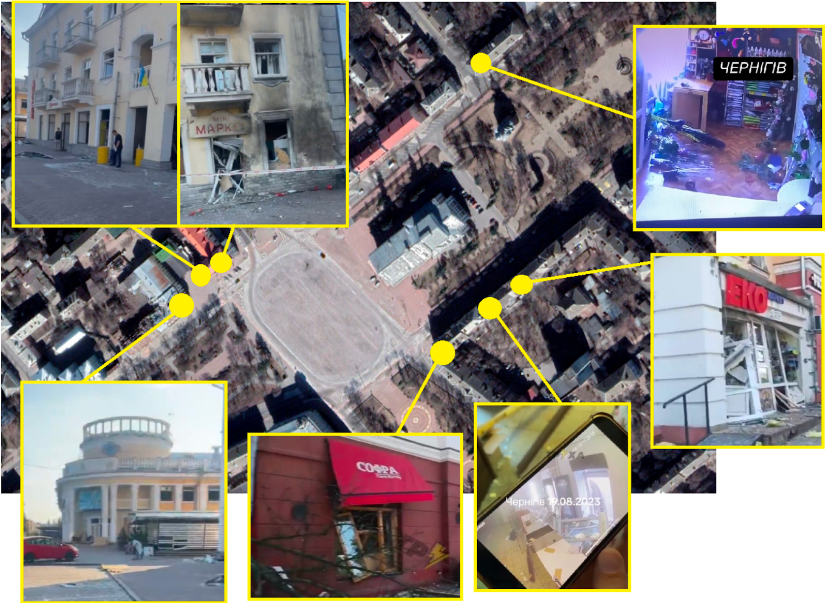
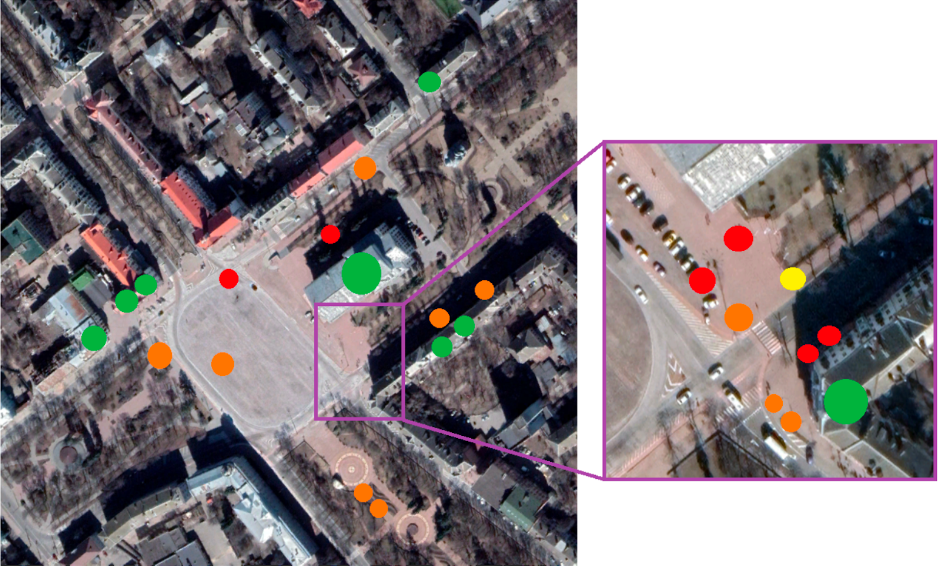
An overview of the damage caused to the surrounding buildings in central Chernihiv, Chernihiv Oblast, identified with footage shared to Telegram and Twitter
Authors: Centre for Information Resilience
Type of weapon
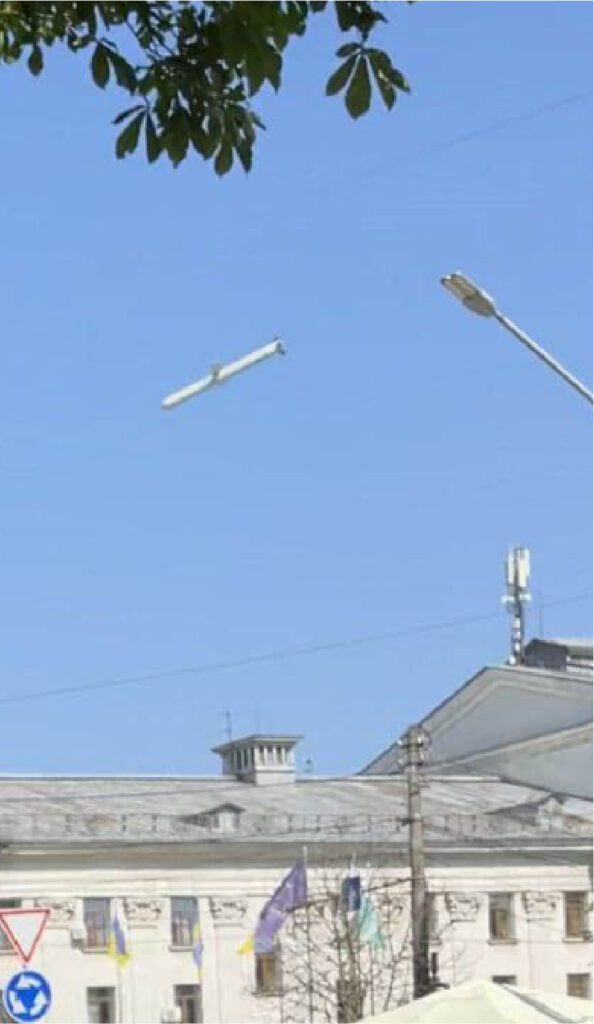
On 20 August 2023, Yurii Belousov, head of the Department for the Supervision of Criminal Proceedings in Crimes Committed in the Context of Armed Conflict (the ‘War Department’) of the Office of the Prosecutor General of Ukraine, stated that Russian troops had attacked Chernihiv using an Iskander-M ballistic missile. However, open sources yield evidence that an Iskander-K cruise missile was used in the attack. In a freezeframe from a video showing the moment of the missile’s impact on the drama theatre, wings on the missile’s body and tail fins for stabilisation are clearly visible.
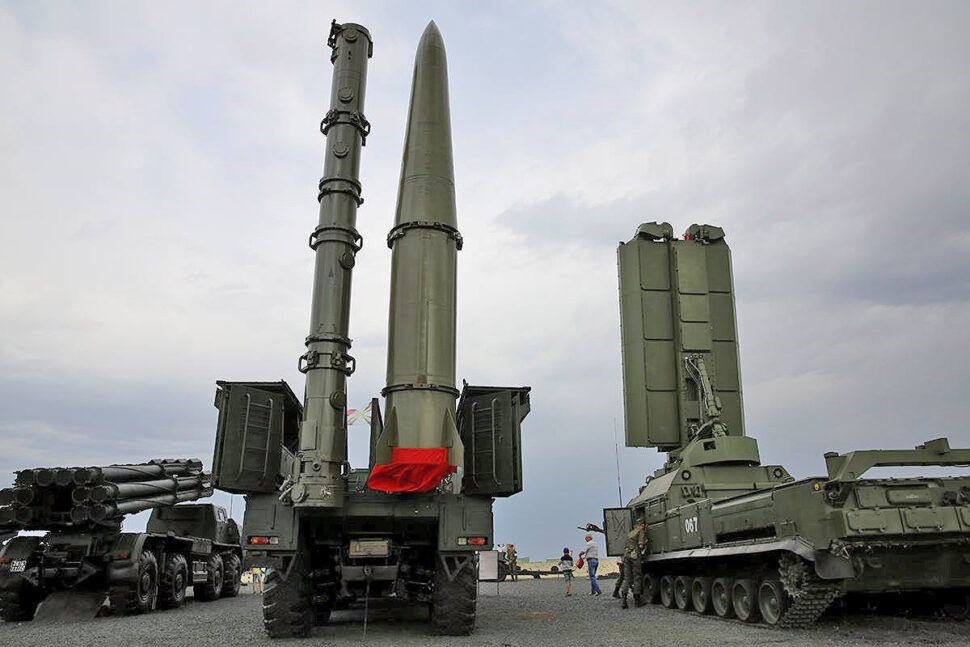
The photo below shows an Iskander-K cruise missile (left) and an Iskander-M ballistic missile (right) on a 9P78-1 self-propelled launcher (SPL), part of an 9K720 Iskander system. Though the cruise missile in the photo is inside a transport and launch container, it is immediately apparent that they there are significant differences in the appearances of the two missiles.
In early September 2023, during a field mission to Chernihiv Oblast, Truth Hounds documenters managed to identify witnesses to a missile’s flight that day. All five witnesses said they heard a “whistle” and a “hum” similar to the sound of a jet aircraft. The Iskander-K missile is equipped with a turbojet engine, which means that it makes a sound similar to that of a jet aircraft during flight. This distinguishes it from the ballistic variation of the Iskander, whose solid-fuel engine operates only during the initial part of the flight, after which it shuts down, and the missile moves along the ballistic trajectory by inertia and does not emit a sound like the hum of a jet engine.
Type of fuse
The day after the attack, Yurii Belousov also stated that the missile used to attack Chernihiv was programmed to detonate in mid-air. According to him, this was done in order to inflict maximum damage on the people around the theatre building.
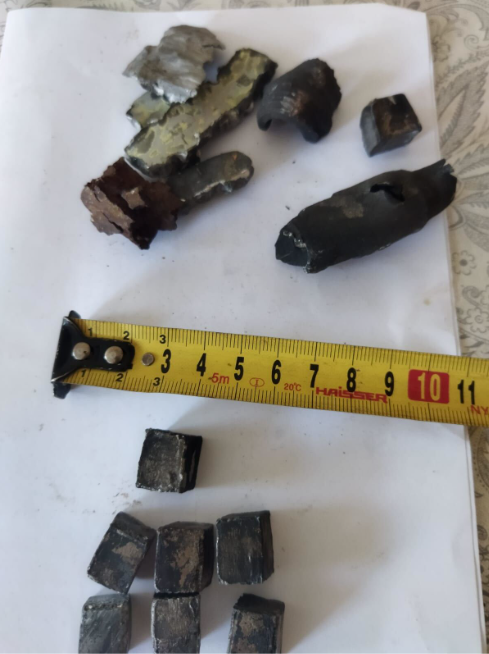
The statement that the missile was detonated over the building can be substantiated by the fact that residents found 1-cm cubic metal striking elements at distances of up to 700 metres from the site of the explosion. Such striking elements are typical, for example, of the warheads of Iskander-K and 3M-14 Kalibr missiles and pose a danger to people in open spaces within a radius of some hundreds of metres from the centre of the explosion. For example, six of the seven people killed in the attack were outside the drama theatre at the time of the strike, while local authorities reported 76 buildings as being damaged. Our partners from the Centre for Information Resilience (CIR) created a map showing the locations of civilian casualties.
An overview of damage caused to central Chernihiv, including civilian casualties (injuries are marked in orange, fatalities in red). Buildings damaged in the strike are marked in green. The map covers only those damages and casualties that could be identified via open sources.
Authors: CIR
Striking elements
Photo provided to Truth Hounds by eyewitnesses to the attack
The nature of the damage to the drama theatre itself also points to a high probability of the missile warhead detonating above the building. It was the roof that suffered the most, as the blast wave blew parts of the building downwards or into the attic. It is noteworthy that the triangular brick walls built between the roof and the ceiling of the upper floor remained intact and without any noticeable traces of the blast wave. A video report by Suspilne Chernihiv showed that the ceiling of the upper floor directly below the site of the missile explosion was not completely destroyed, as the metal structures remained intact. This would hardly have been possible if the missile detonated at the moment it had struck the theatre building.
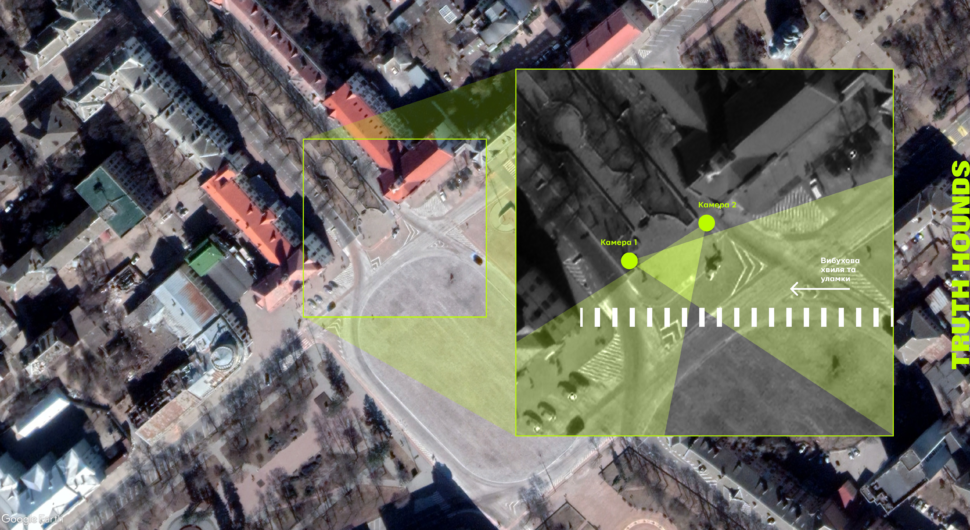
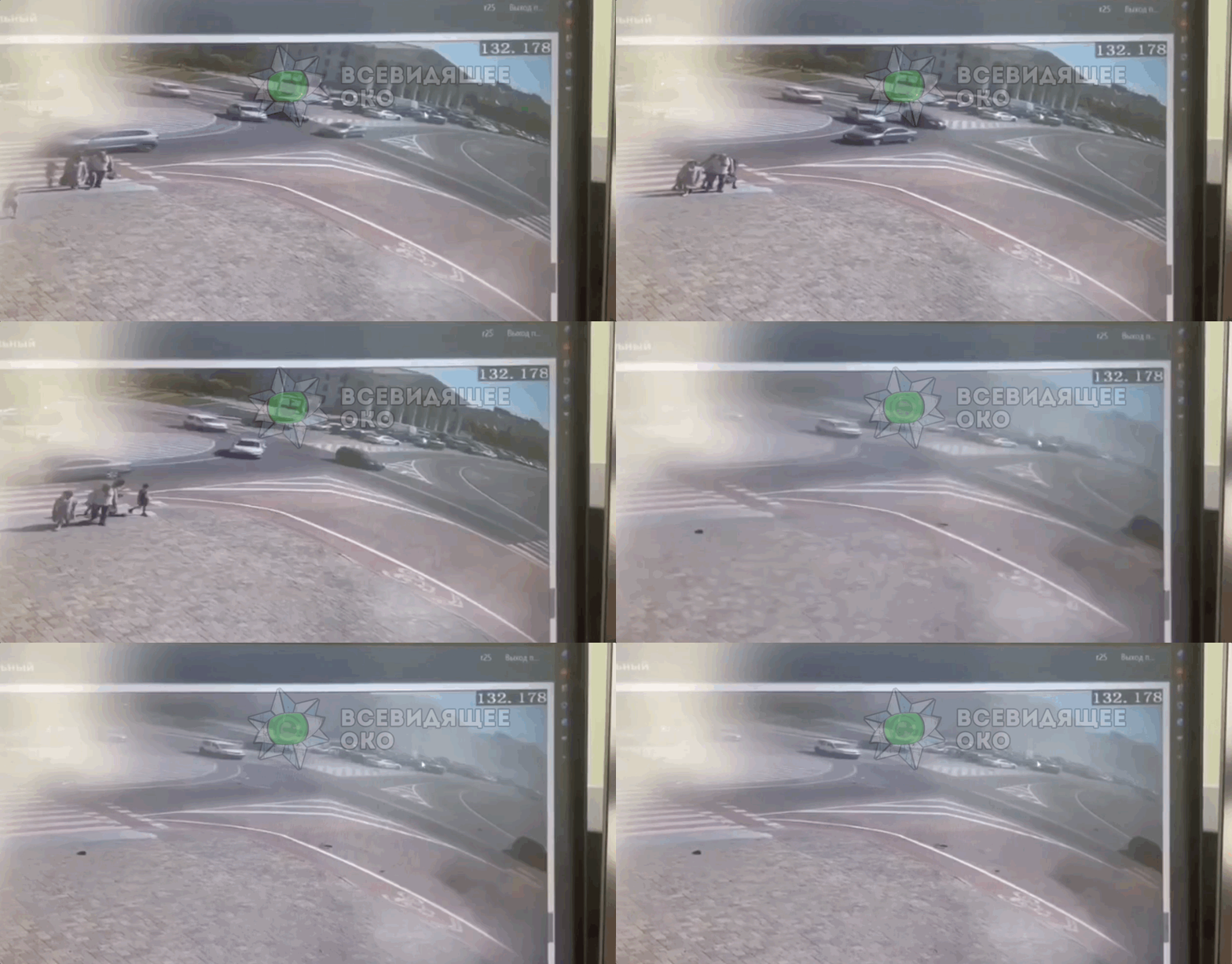
The moment of the attack on the drama theatre was recorded on CCTV cameras located at the intersection of Myru Avenue, Hetmana Polubotka Street, and Migistratska Street (see the diagram below).
The white dashed line indicates the blast wave
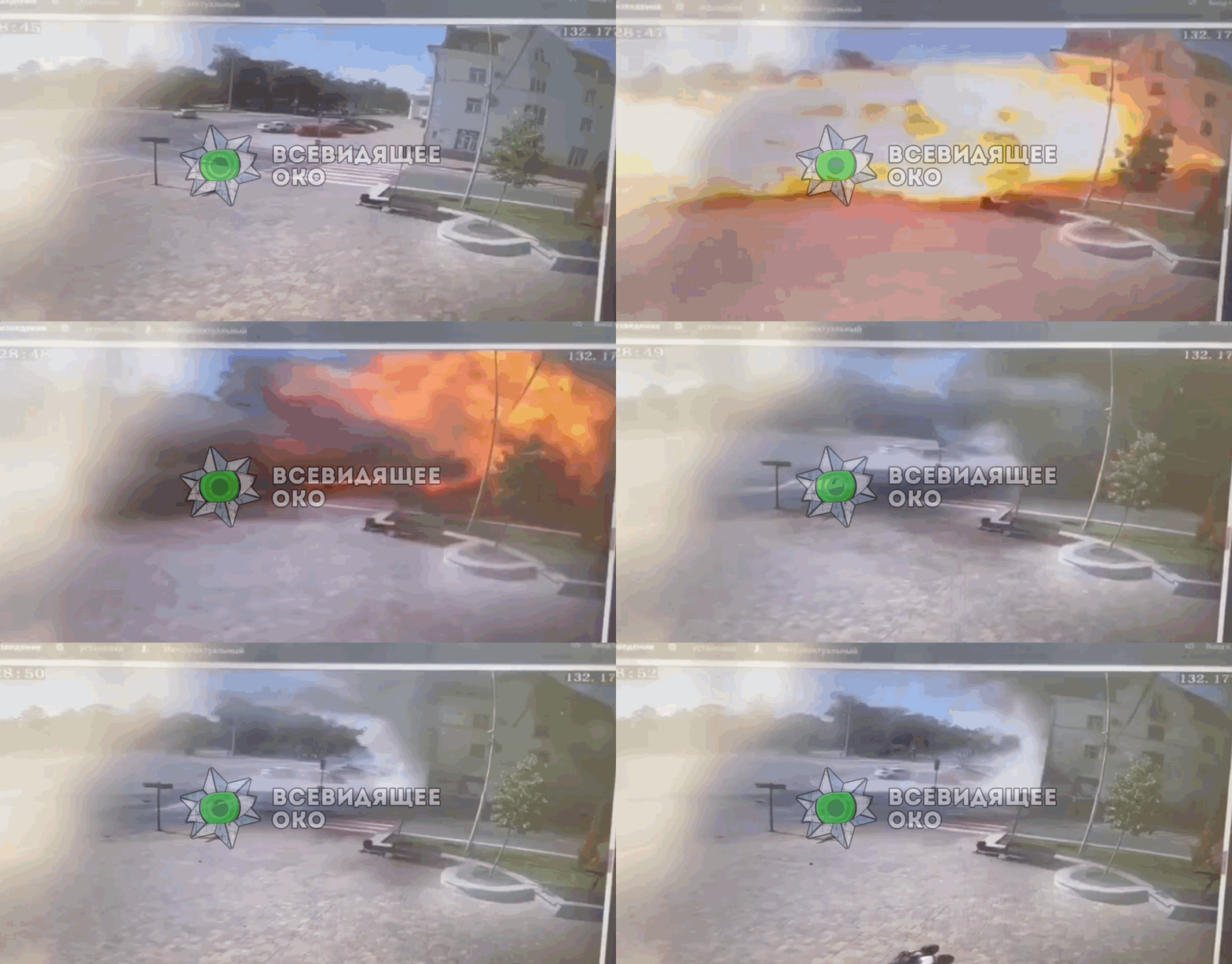
The footage shows that the munition detonated above the drama theatre building, after which, most likely, part of the fuel tank and engine of the missile flew towards the corner of the building at 20 Myru Avenue, about 120 metres from the centre of the explosion.
The detonation and the direction of movement of the blast wave
The missile breaks away from the target using a so-called proximity (non-contact) fuse. This avoids the need for the nose of the missile to come into contact with a hard surface. Non-contact detonators are installed on missiles, bombs, and shells (including cluster munitions) to maximise the area of destruction. They provide an additional effect, for example, in cases where it is necessary to hit well-dug-in infantry. They are often also fitted to air defence systems, as this allows an anti-aircraft missile to detonate in close proximity to a moving air target, allowing it to be destroyed without a direct hit.
Non-contact fuses can be passive, active, and semi-active. Passive detonators respond to a certain type of signal produced by the target itself, while active detonators emit a signal and respond to its reflection from the target. Semi-active detonators use an external energy source to emit the signal. Depending on the type of signal to which the fuse responds, there are magnetic, optical, electrostatic, acoustic, and radio fuses, among others.
Non-contact detonators also exist for Iskander missiles. It is known from open sources that one of the enterprises of the Almaz-Antey concern, namely PJSC NPP Impulse, produces laser detonation height sensors for Tochka-U, Iskander-M, and other tactical missiles. The manufacturer claims that such fuses are made on the basis of unified technical solutions and can therefore be installed on various types of missiles. It is also known that, in 2012, the Iskander-E missile system – an export version of the Iskander-M – began to be equipped with a new generation laser sensor became part of the equipment of the Iskander-E missile system. The main differences between the two systems is the export version’s reduced range of 280 km and more significant circular probable deviation.
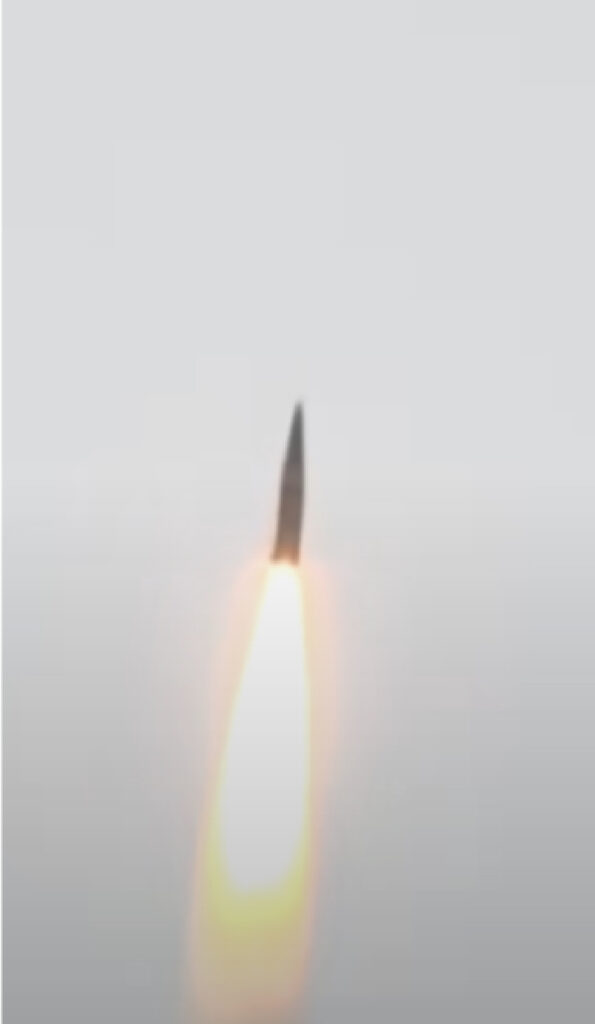
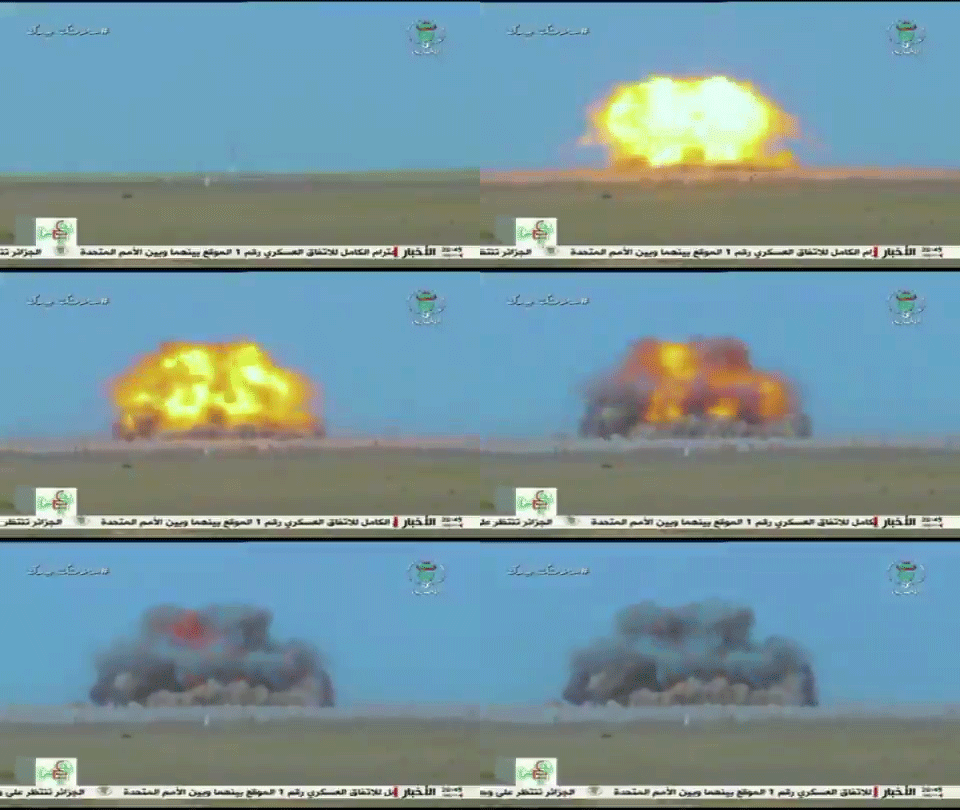
The presence of a non-contact detonator in the unitary warhead of these missiles can be verified by a video of an Iskander-E test shown on Algerian television in 2020. Three years earlier, Russia had delivered Iskanders to Algeria.
An aerial detonation of an Iskander-E missile
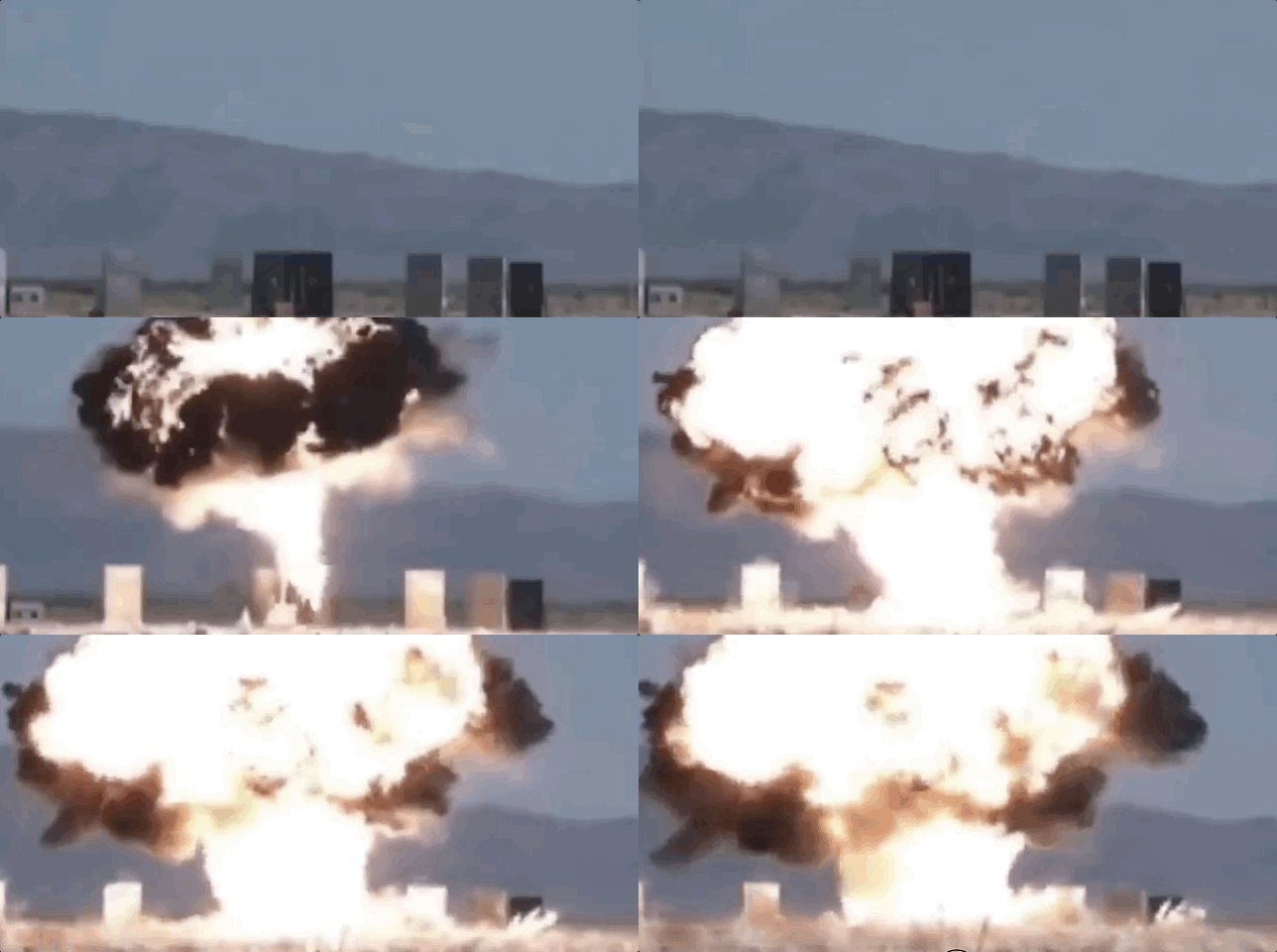
The poor quality of the video requires additional illustration of the way that a blast wave propagates during an aerial detonation, as it may give a false impression to a individual unfamiliar with the subject. The gif below demonstrates an aerial detonation of an American 227 mm GMLRS-AW M30A1 munition, equipped with 180 000 tungsten carbide warheads. As one can observe, the way the blast wave propagates in this case is similar to the one seen above with the Iskander; immediately after detonation, a fireball forms above the surface, which, after a moment, connects with it in a thin jet of flame, before sinking closer to the ground and spreading outwards.
The warhead of the Iskander-K cruise missile can also be equipped with non-contact fuses and detonate at a given height above its target. Similarly, such detonators can be installed on 3M-14 Kalibr sea-launched cruise missiles and, probably, also on X-101 air-launched cruise missiles.
Missile flight direction
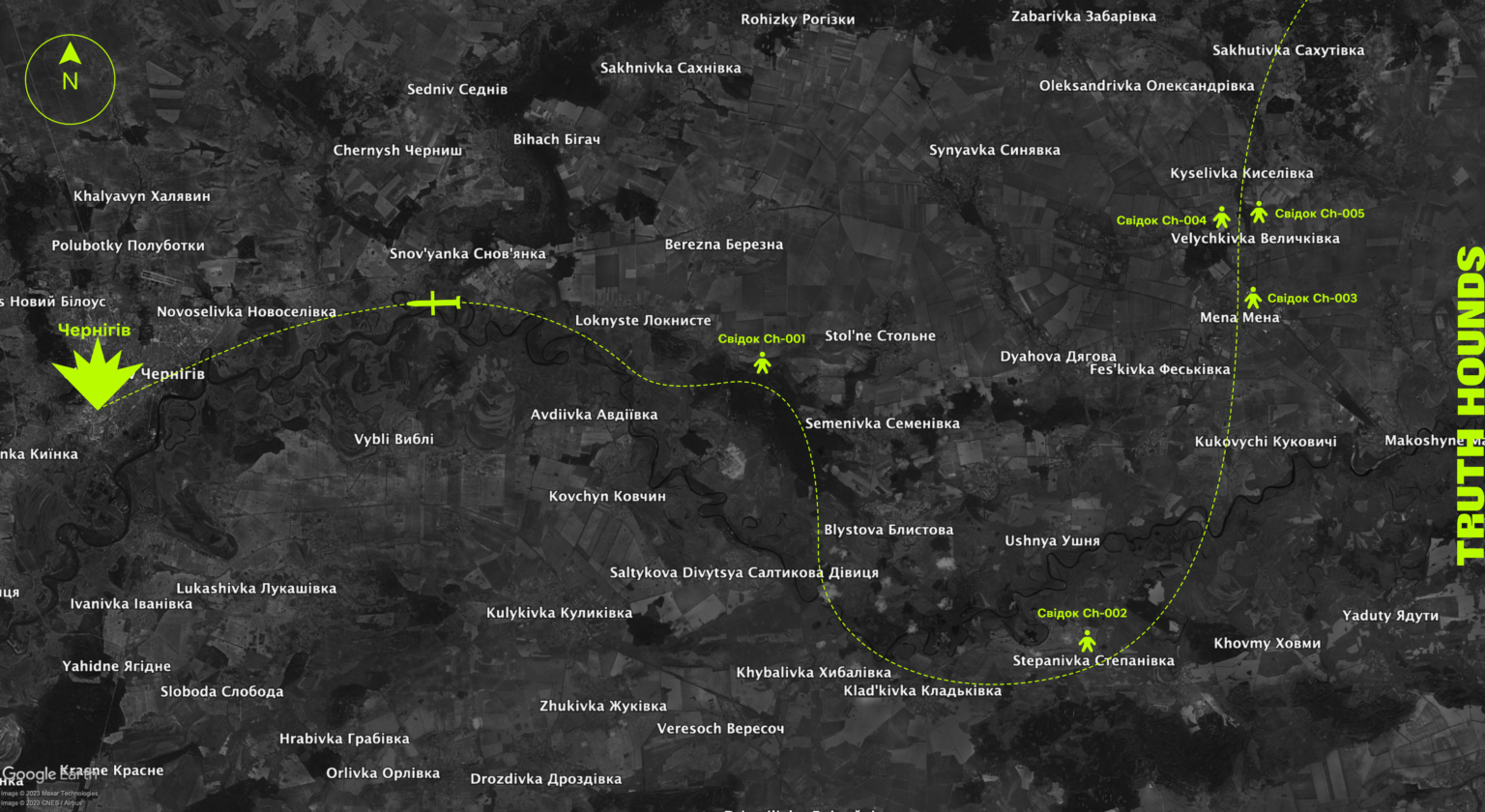
During the above-mentioned field mission, Truth Hounds documenters identified witnesses to the missile’s flight on 19 August in the settlements of Husavka, Stepanivka, Mena and Velychkivka in the Chernihiv Oblast. Based on eyewitness accounts of the direction of the missile’s flight through their settlements, we have established the route of the missile that was fired at Chernihiv. As can be seen from the map below, the missile manoeuvred through Chernihiv Oblast and was most likely launched from either Russia’s Bryansk or Kursk oblast. We are inclined to rule out the possibility of significant manoeuvring of the missile during its flight over Russian territory, as this capacity is intended specifically at evading enemy air defence systems. The established route of the missile indicates that the key manoeuvre was carried out near the village of Stepanivka, changing its flight direction from southwest to northwest and then to the west, towards Chernihiv.
A witness from the village of Stepanivka said that the missile was flying at ‘the same level’, at an altitude of some tens of metres. With the assistance of a drone, the documenters clarified that it flew at an altitude of 26 metres. These facts further confirm the use of a cruise missile, as such missiles are capable of changing their course at any part of their flight and flying parallel to the ground.
The missile’s movement according to eyewitness accounts
Who carried out the attack?
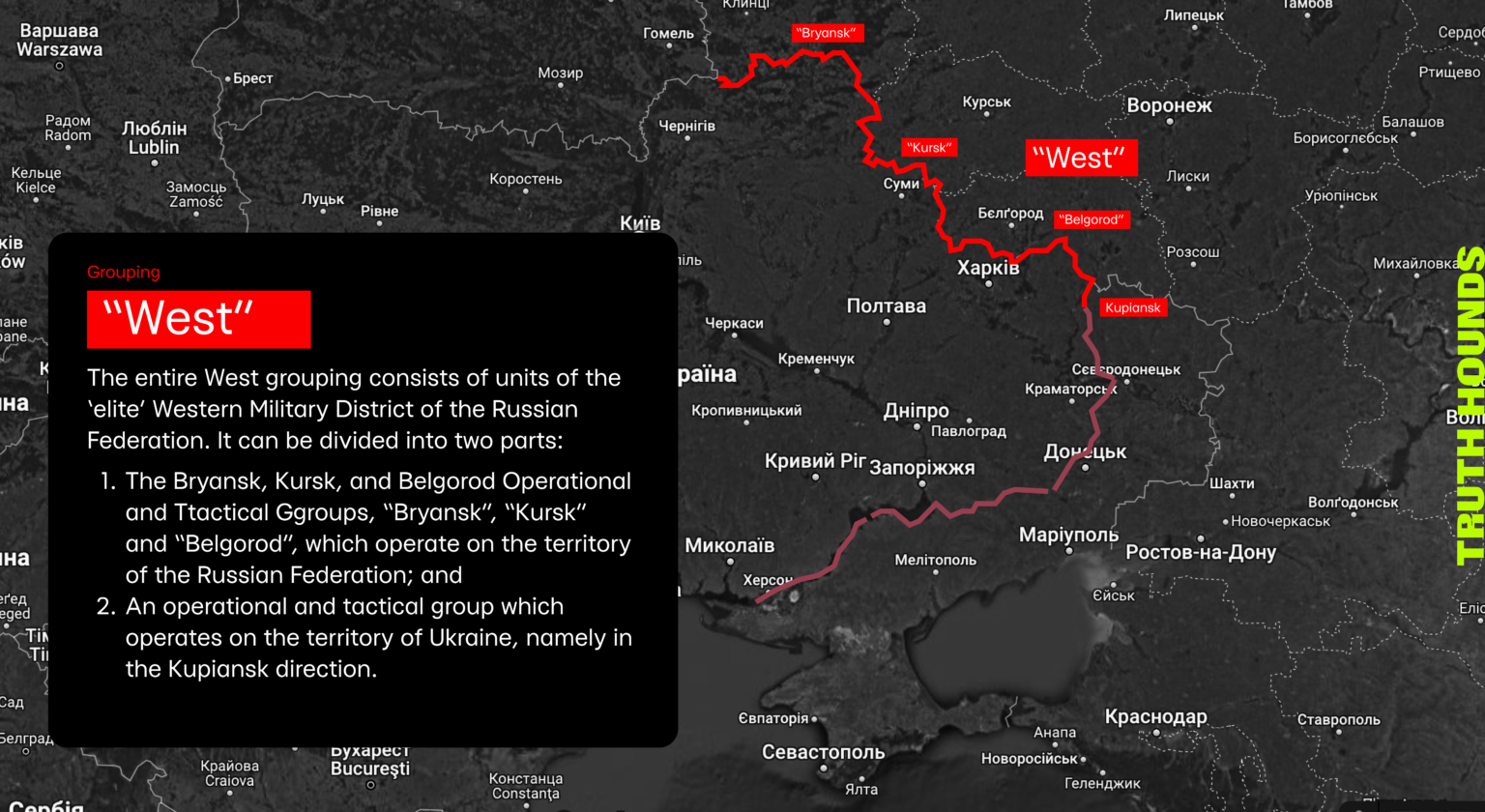
The ‘West’ military grouping was responsible for missile attacks on Ukraine’s northern and northeastern oblasts (Chernihiv, Sumy, and Kharkiv) which bordered Russia. This follows from the fact that the Russian Ministry of Defence itself publicly acknowledges that Iskander attacks on these regions are carried out under the command of the West military grouping. For example, on 24 July 2023, units of the West group struck the village of Honcharivske, Chernihiv Oblast with two Iskanders. On 11 May 2023, the same group’s Iskanders struck Balakliya, Kharkiv Oblast.
In order to determine which of the units equipped with Iskander systems belong to the West group, it is necessary to consider its structure.
The group operating in the Kupiansk direction is equipped with up to eight units of Iskander ballistic missile systems. The exact number of Iskander systems in the Bryansk, Kursk, and Belgorod oblasts is unknown.
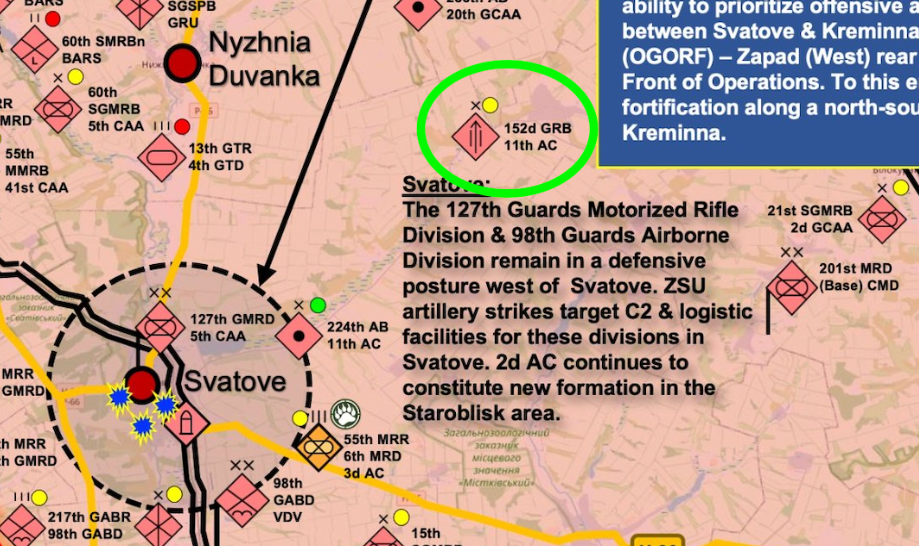
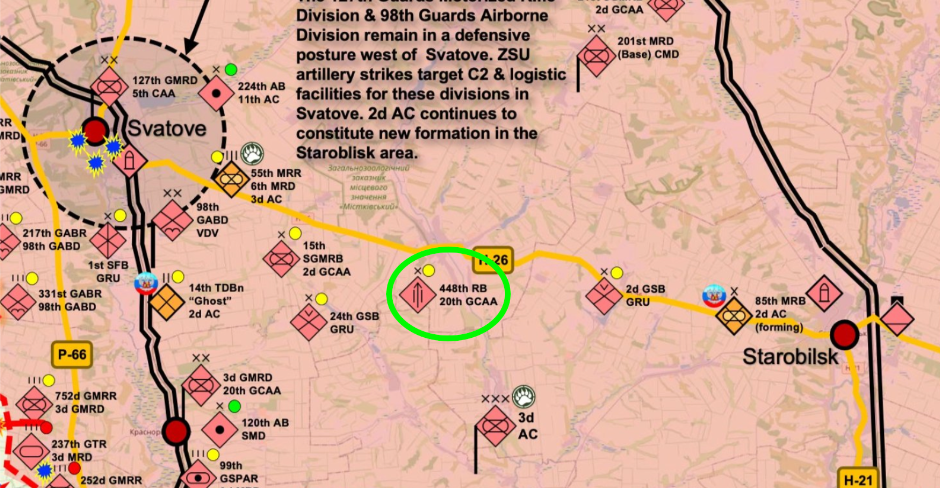
To identify the person responsible for the attack on the Chernihiv Regional Drama Theatre, we have identified those units of the West group that are armed with Iskanders, based on open-source intelligence. These are the 112th Missile Brigade of the 1st Tank Army, the 26th Missile Brigade of the 6th Combined Arms Army, the 448th Missile Brigade of the 20th Combined Arms Army, and the 152nd Missile Brigade of the 11th Army Corps.
In the following sections, in order of increasing probability, we will consider the potential involvement of each of these units in the attack.
112th Missile Brigade of the 1st Tank Army of the Russian Federation
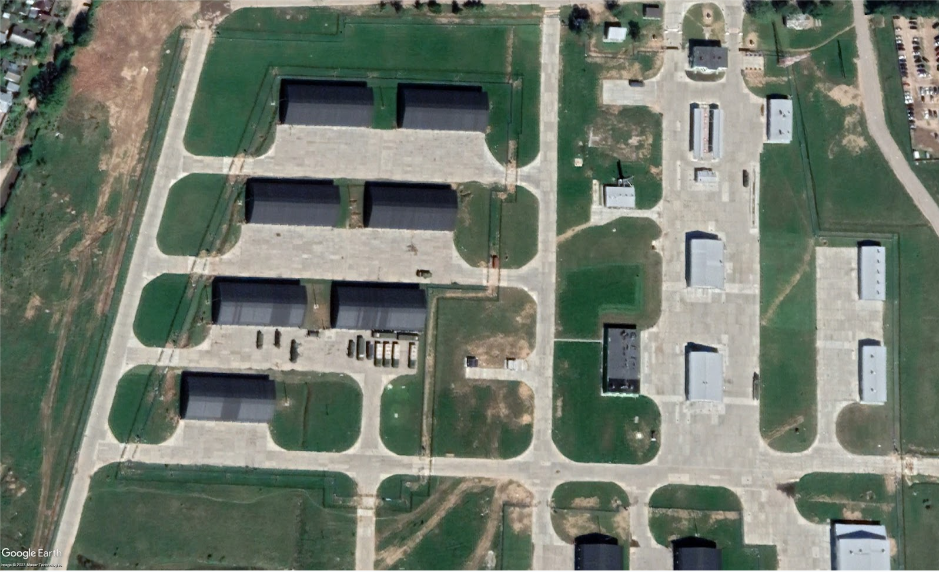
The 112th Missile Brigade (Military Unit № 03333) is permanently stationed in Shuya, Ivanovo Oblast and is armed with a standard brigade set of 12 Iskander missile systems. Little is known about this brigade. In 2019, it was deployed to the territory of Belarus to take part in a solemn parade and, as of May 2021, at least one the brigade’s three divisions was permanently deployed in Shuya.
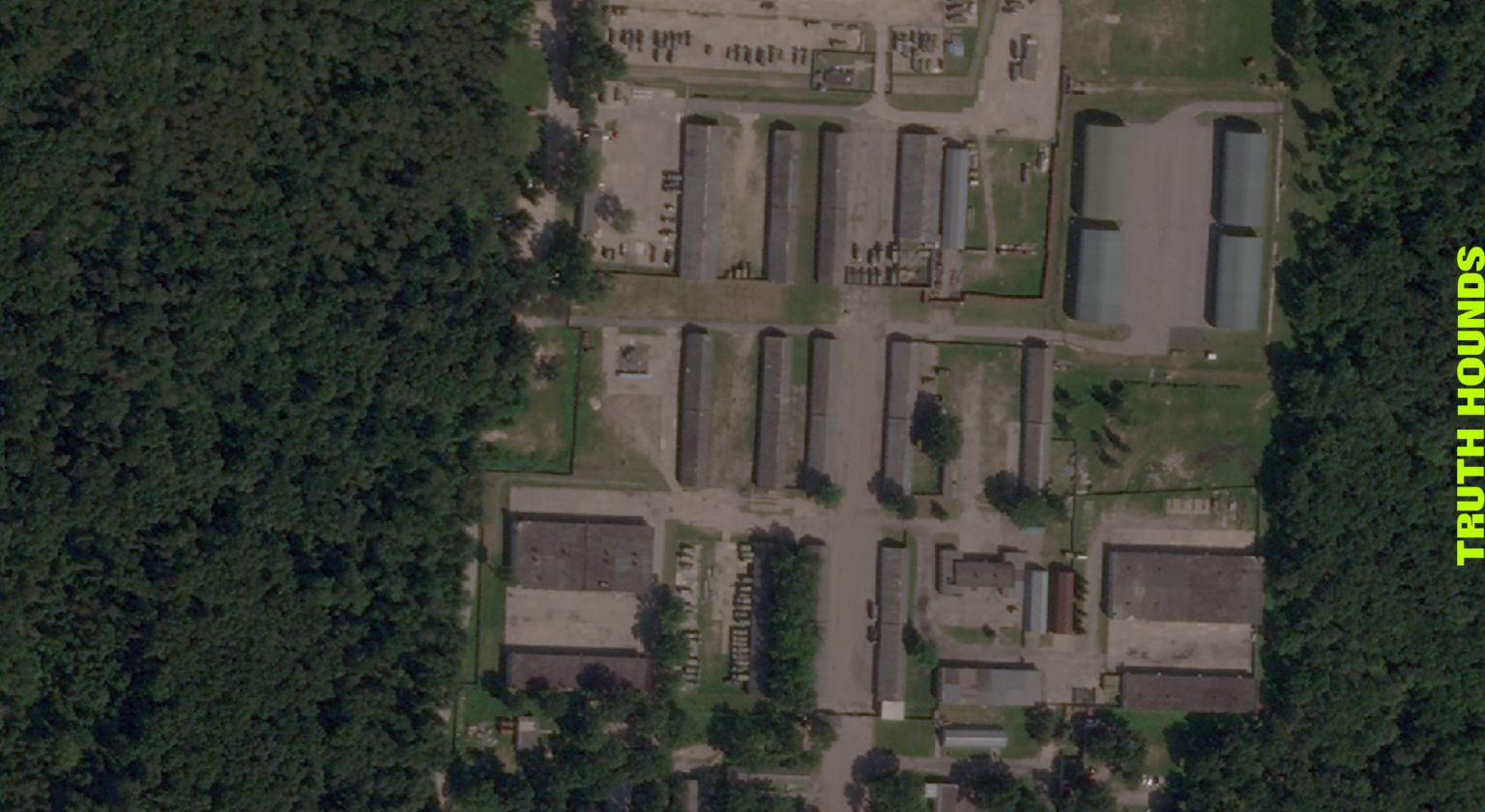
A Maxar satellite image from May 2021, showing the permanent location of the 112th Missile Brigade in Shuya, Ivanovo Oblast
Over the last six months, units attached to the 1st Tank Army have been deployed in the Kupiansk direction (closer to Valuiki, Belgorod oblast). The 112th Missile Brigade is supposed to provide fire support to these units. For this purpose, the most logical place for its deployment is the territory of Belgorod Oblast. This logic seems even more convincing given that another missile brigade, the 26th Missile Brigade, is already operating in the neighbouring Bryansk and Kursk oblast (as discussed below). At the same time, there is no evidence available in open sources of the 112th Missile Brigade being involved in combat in Russia’s full-scale invasion of Ukraine.
Based on the above, we can assume that the use of the 112th Brigade to attack Chernihiv in August 2023 is highly unlikely.
152nd Missile Brigade of the 11th Army Corps of the Russian Federation
The 152nd Missile Brigade (Military Unit № 54229) is stationed in Chernyakhovsk, Kaliningrad Oblast. It is armed with 12 units of the Iskander missile system, which it received in 2018. In the summer of 2022, the Ukrainian Defence Forces eliminated the brigade’s command post chief. Later, during an offensive in Kharkiv Oblast, Ukrainian troops captured servicemen attached to the 152nd Missile Brigade, which confirmed the direction and the fact of this brigade’s involvement in Russia’s aggressive war on Ukraine. As of April 2023, part of the brigade operated on the Svativsk direction, while another part probably remained close to its location of permanent deployment in Kaliningrad Oblastto ‘protect’ the Russian semi-exclave, as it is the only brigade with Iskanders in the region.
Given the location of operation of this brigade, we have every reason to consider its involvement in the attack on Chernihiv as extremely unlikely.
448th Missile Brigade of the 20th Combined Arms Army of the Russian Federation
The 448th Missile Brigade (Military Unit № 35535) is stationed in the village of Klyukva, Kursk Oblast. The brigade isarmed with 12 self-propelled Iskander missile launchers.
The tactical designations of the 448th Missile Brigade (left) and the 20th Combined Arms Army of the Russian Federation (right)
This brigade has been involved in a number of missile attacks on Ukrainian territory. For example, there is videoevidence of the brigade firing Iskander-M ballistic missiles at Ukrainian territory on 11 and 25 April 2022.
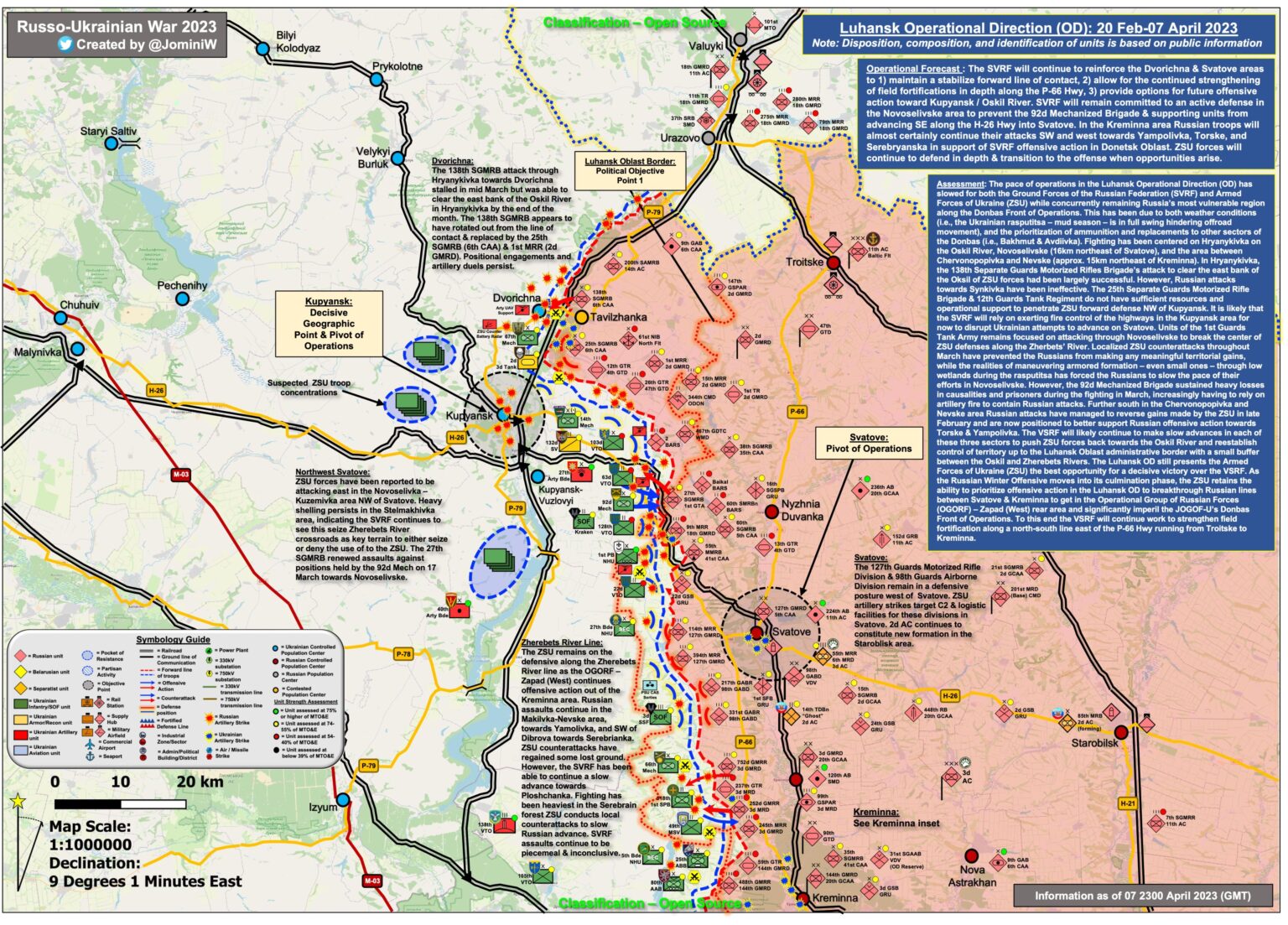
Open sources have repeatedly reported that in April-July 2023, the 448th Missile Brigade operated in the Svatove direction. In October 2023, information circulated that the unit had been relocated to the Kupiansk direction. In any case, its area of operation is limited to the northwestern part of Ukraine’s Luhansk Oblast and, probably, the south of Russia’s Belgorod Oblast. Thus, the version of events which supposes the brigade’s participation in the attack on Chernihiv also looks unconvincing.
The fact that the 448th Missile Brigade’s location of permanent deployment is close to Kursk and, accordingly, in close proximity to the area of operation of several missile units whose ‘home’ bases are hundreds of kilometres from the front, makes it possible to use it as a logistics centre and a place for all such units to replenish their ammunition.
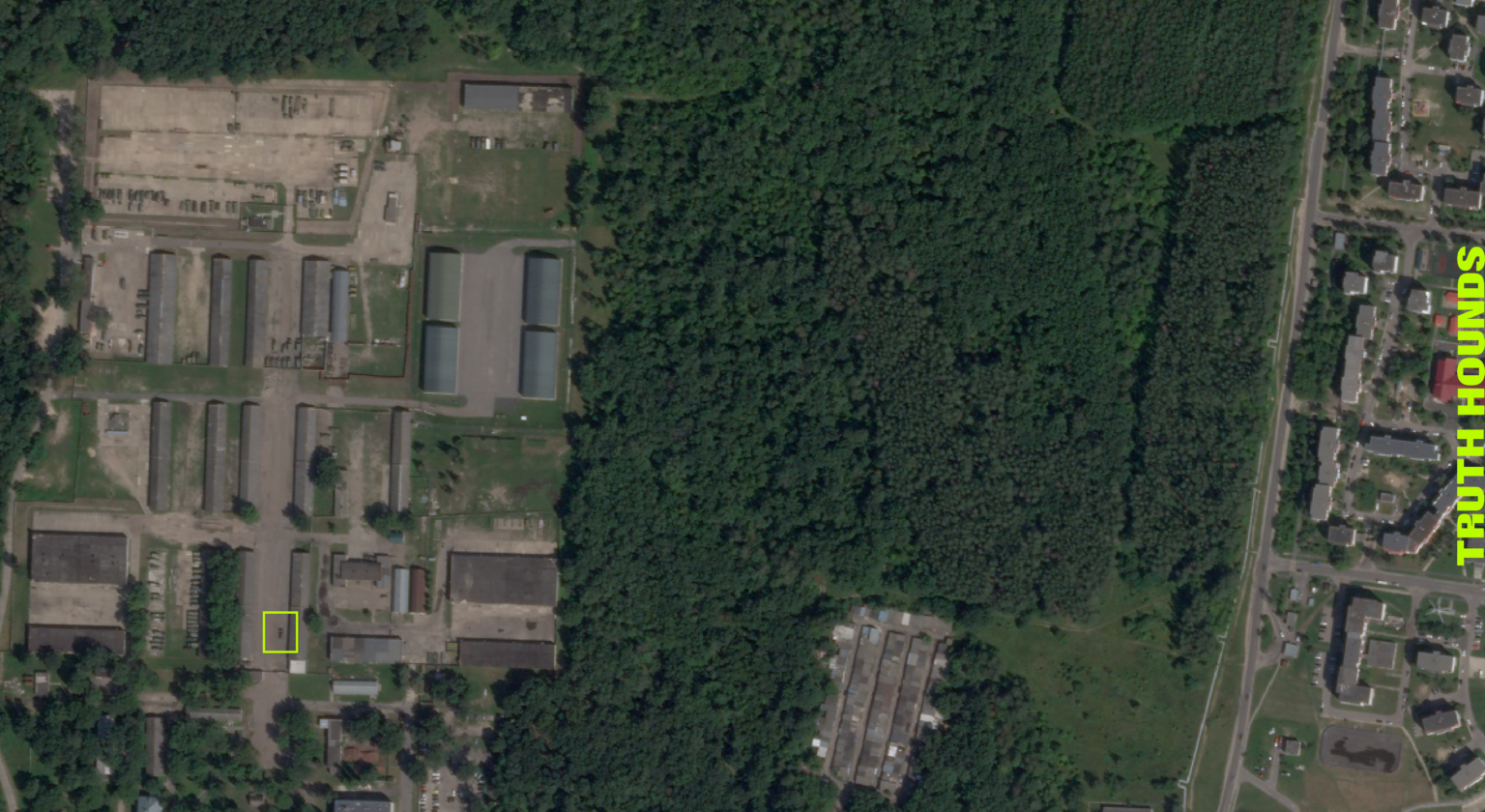
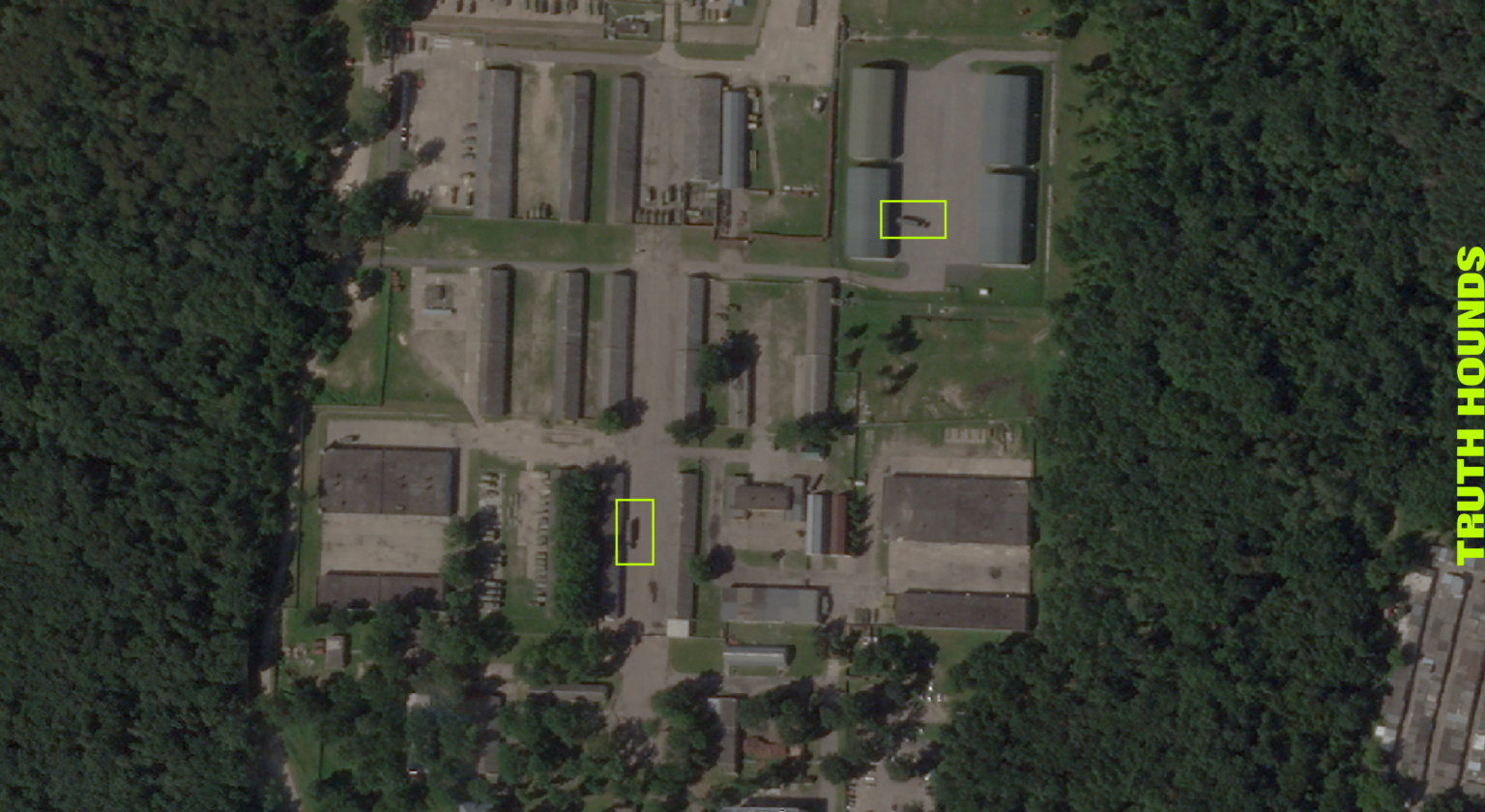
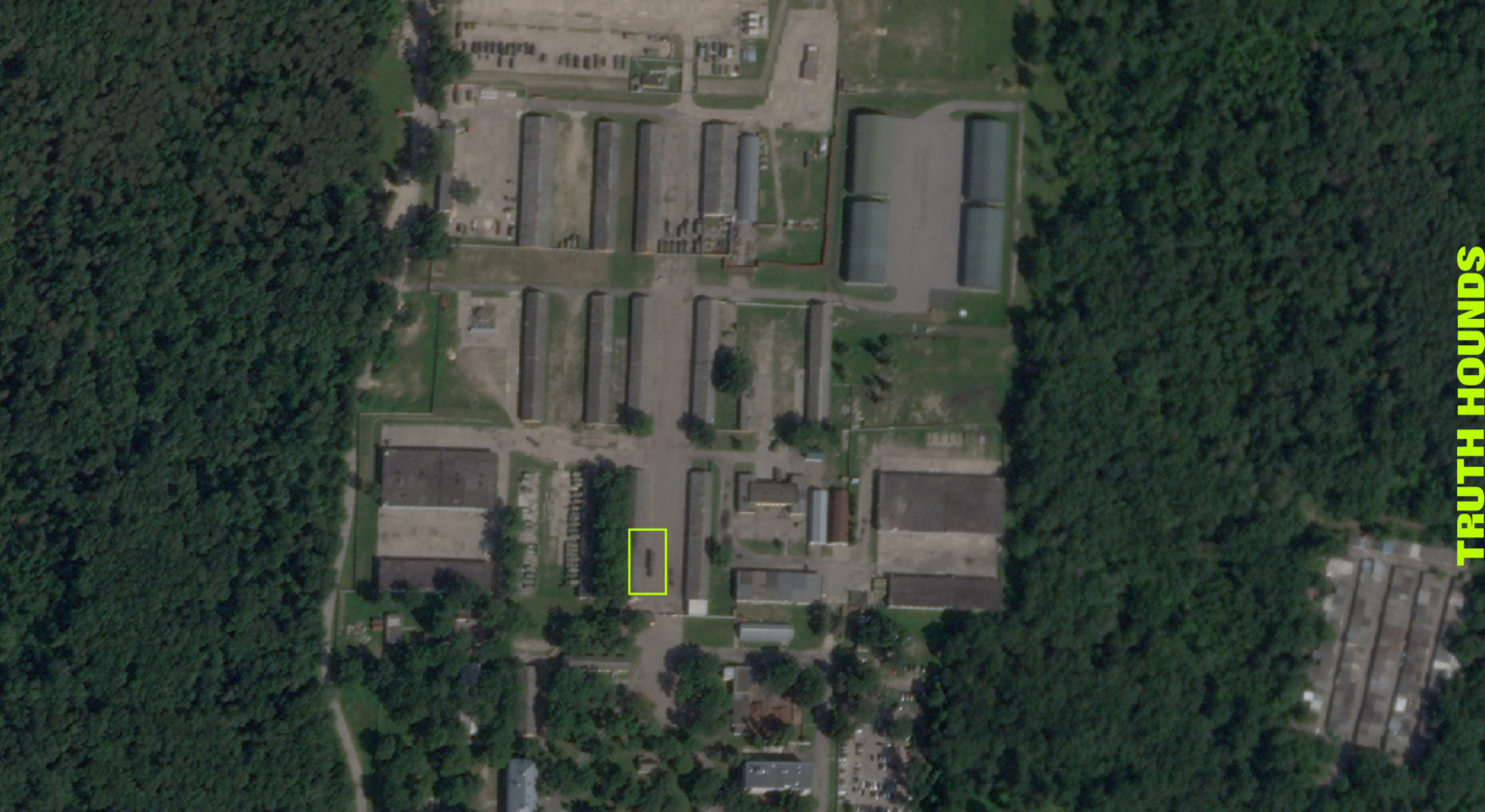
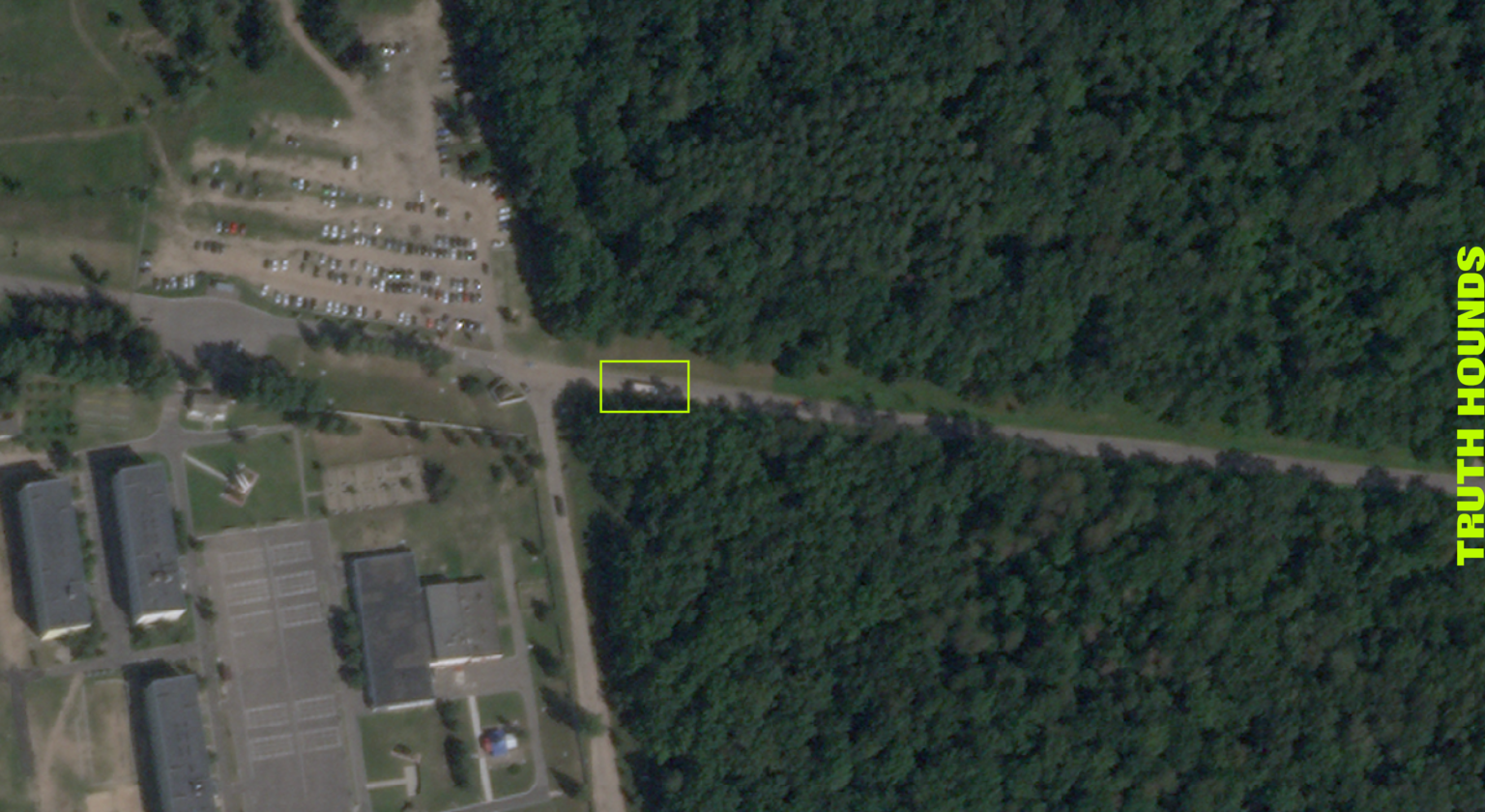
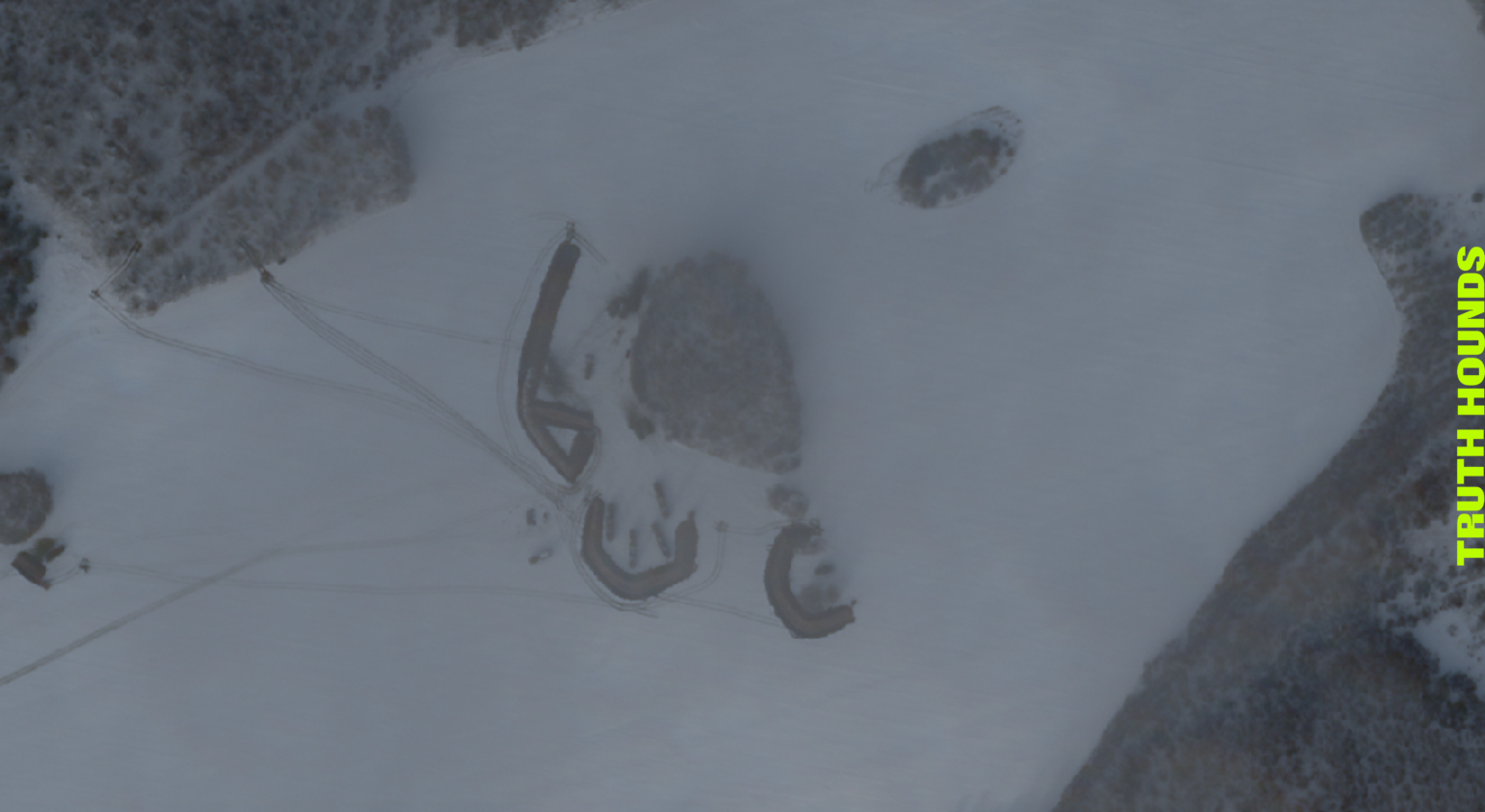
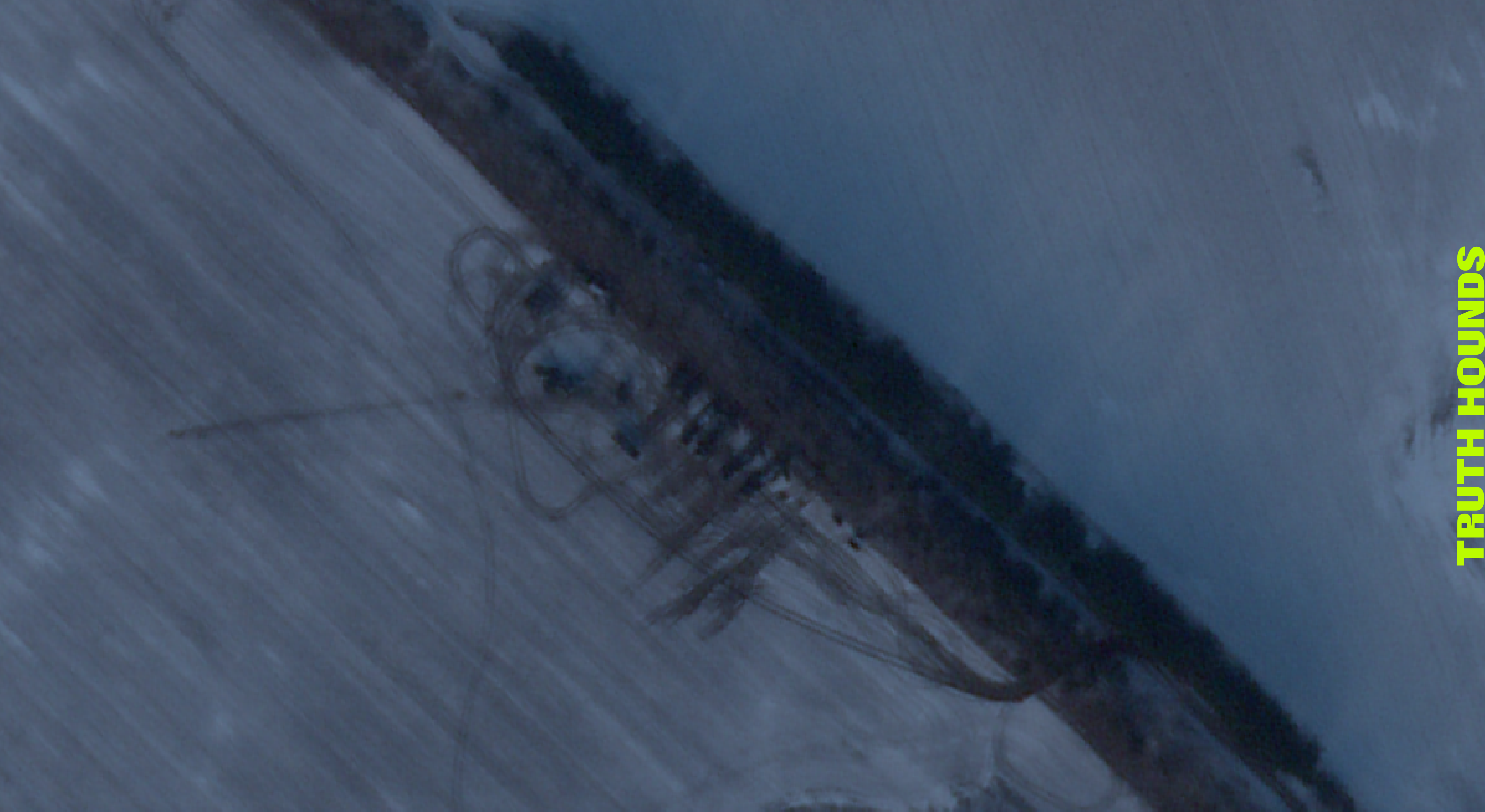
Truth Hounds investigators obtained satellite imagery of the 448th Missile Brigade’s base in the village of Kliukva dated 6, 10, 16, and 19 August 2023 (see images below). In all of these images of the base, no Iskander missile system was visible. However, the images from 10 and 16 August show the movement of trucks, which were probably replenishing the ammunition stored at the base. This scenario is further supported by the fact that, on 19 August, the satellite recorded an Iskander system transport and reloading vehicle (TRV) moving towards the base, most likely to transport two additional missiles and load an SPL. The TRV usually accompanies the SPL near the launch area and, therefore, the most likely purpose of the visit to the Kliukva base could be to replenish the two missiles and return to combat duty.
The above assumptions coincide with information about the replenishment of the Iskander-K missile system in Kursk Oblast which was reported by monitoring resources on 11 August 2023.
Based on the coordinates of the 448th Missile Brigade base, we were able to identify all Telegram users who were there or nearby between 25 August 2023 and 31 August 2023. We managed to do this thanks to the “Telepathy” OSINT tool. After checking the Telegram IDs that we received, we narrowed the list of users down to only those whose profiles indicated their involvement with the Russian Armed Forces. Interested open-source intelligence (OSINT) analysts can find the list here.
A Planet satellite image, showing the base of the 448th Missile Brigade as of 6 August 2023
A Planet satellite image, showing the base of the 448th Missile Brigade as of 10 August 2023. Two vehicles were spotted moving from the site of the pre-war Iskander deployment. This was likely in order to replenish ammunition
A Planet satellite image, showing the base of the 448th Missile Brigade as of 16 August 2023. The movement of one truck on the territory of the base was observed.
A Planet satellite image from 16 August 2023, showing the area around the 448th Missile Brigade base. A vehicle similar to an Iskander TRV can be seen on the road
A Planet satellite image, showing the base of the 448th Missile Brigade as of 19 August 2023. There is no movement on the territory of the base
Iskanders of the 448th Missile Brigade
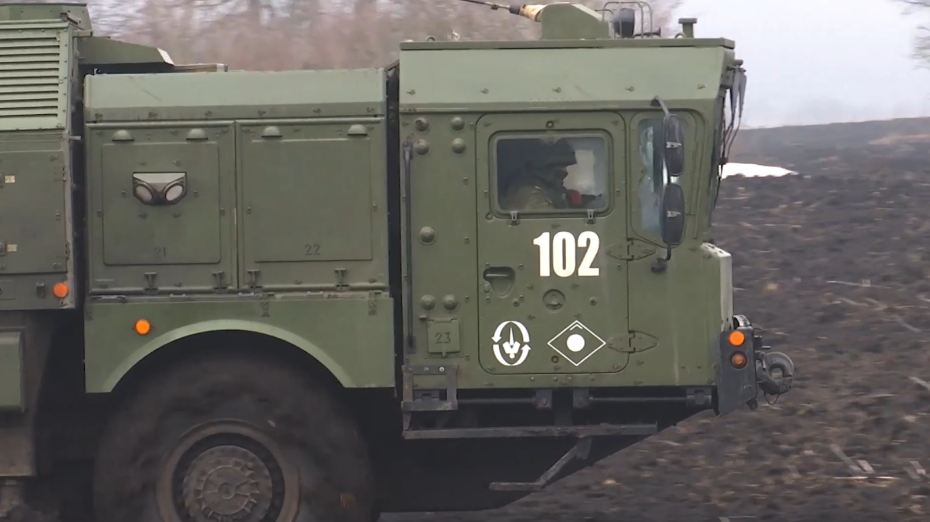
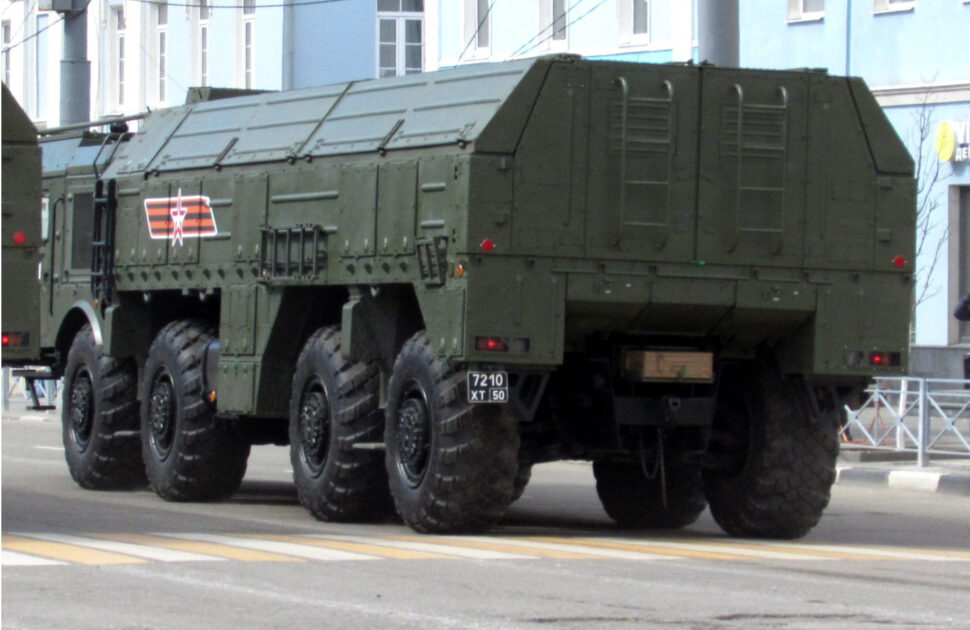
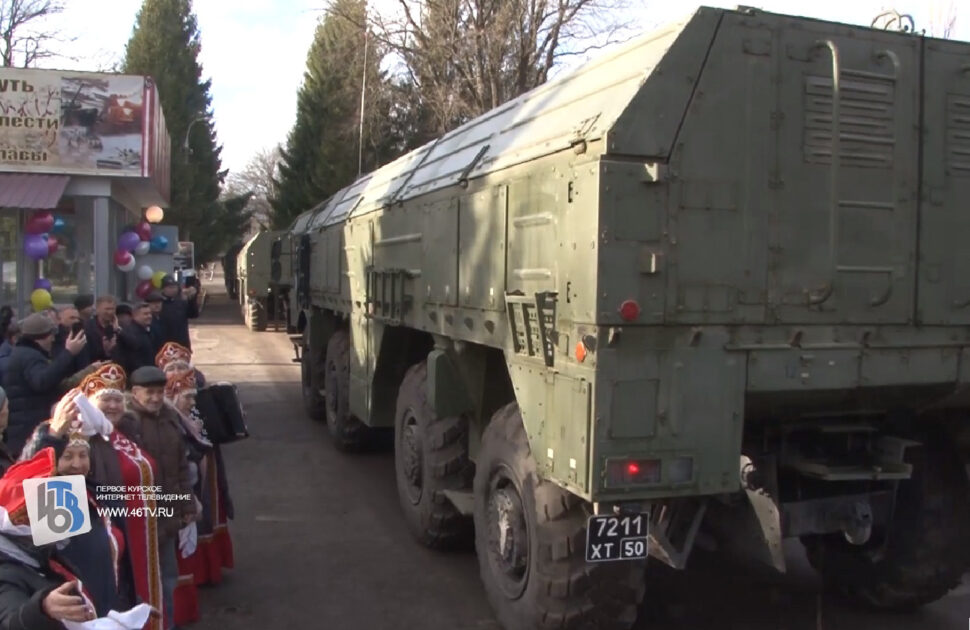
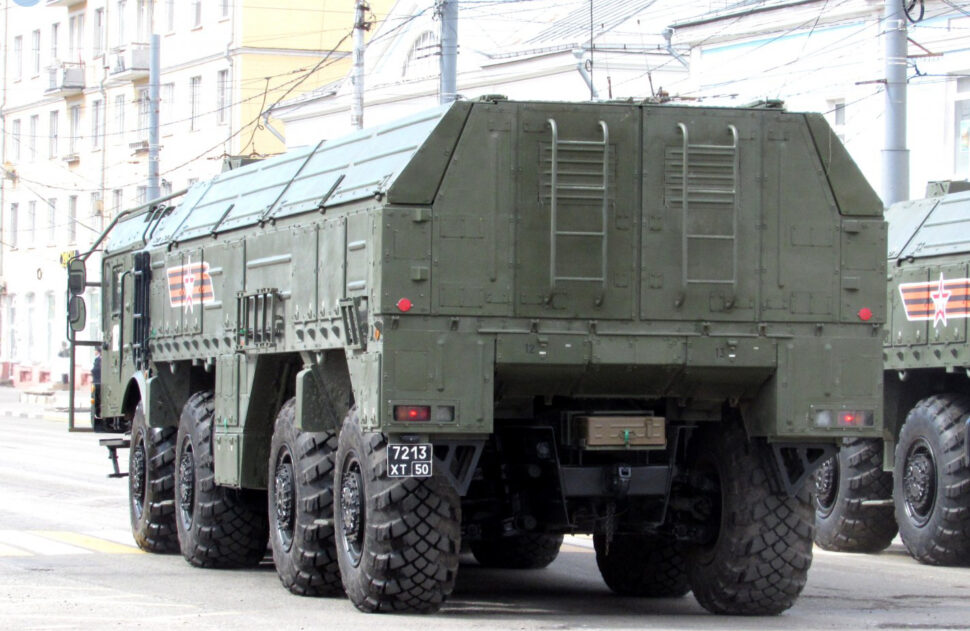
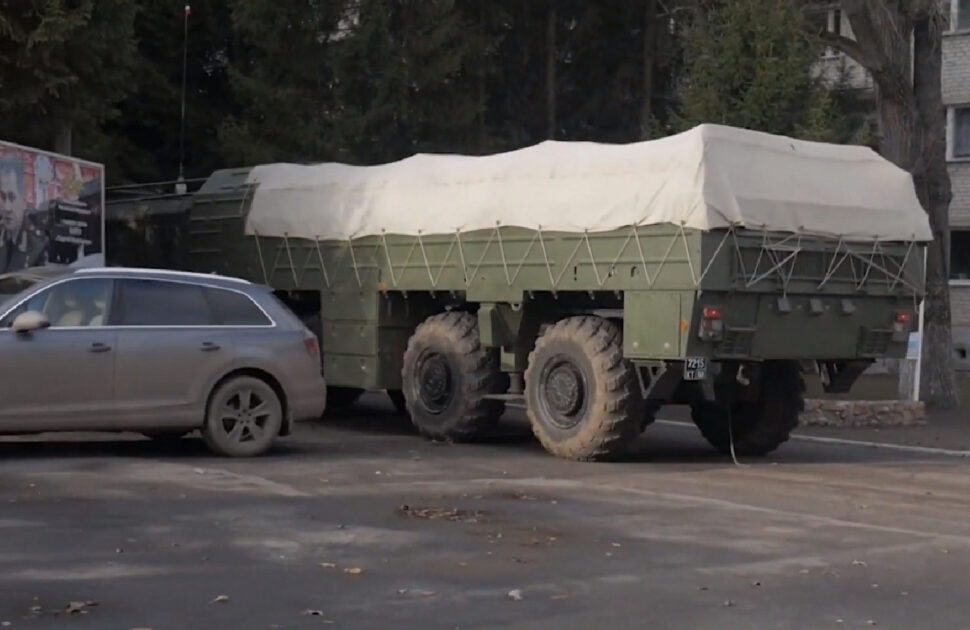
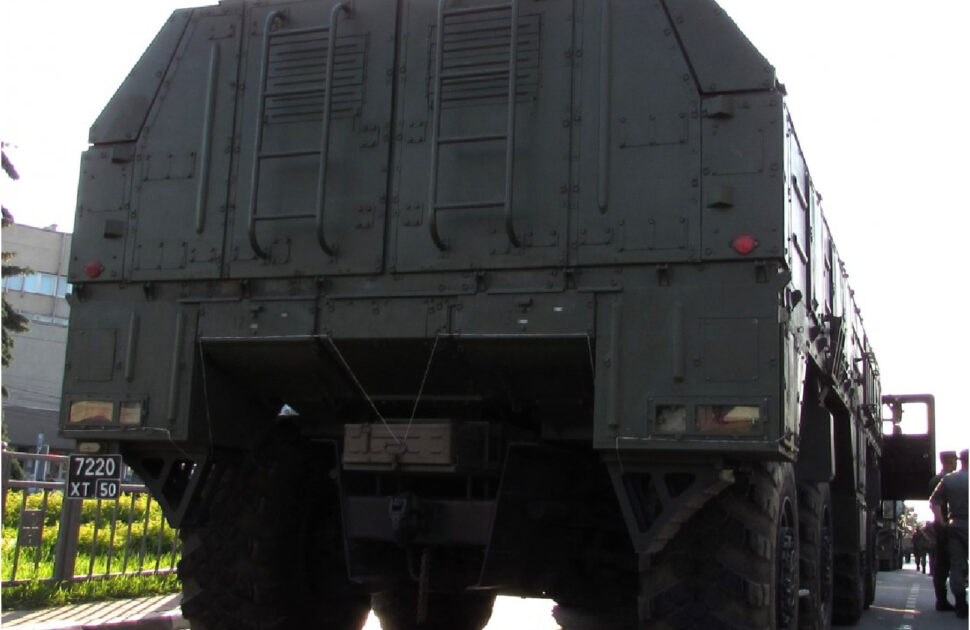
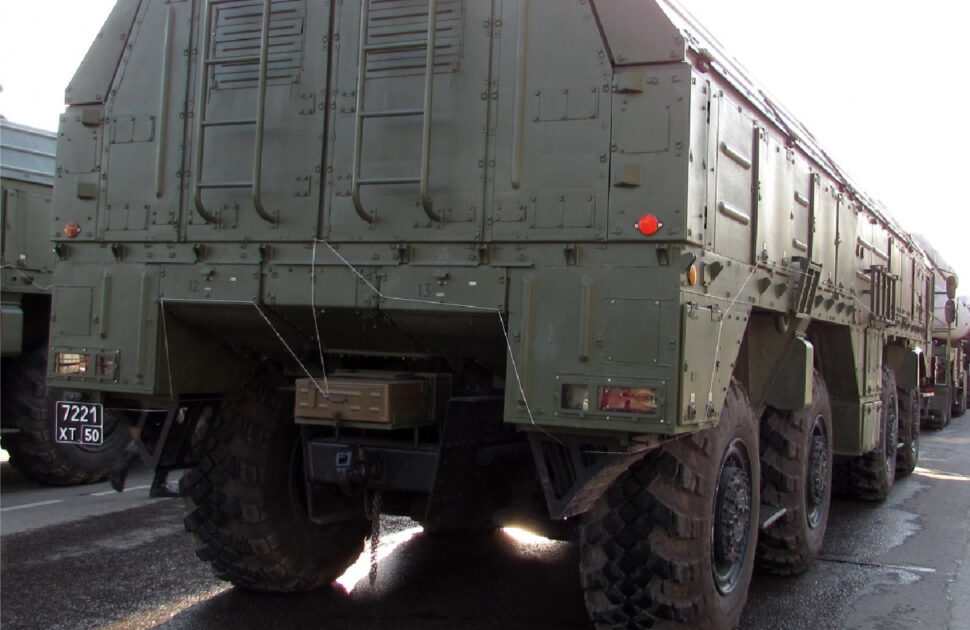
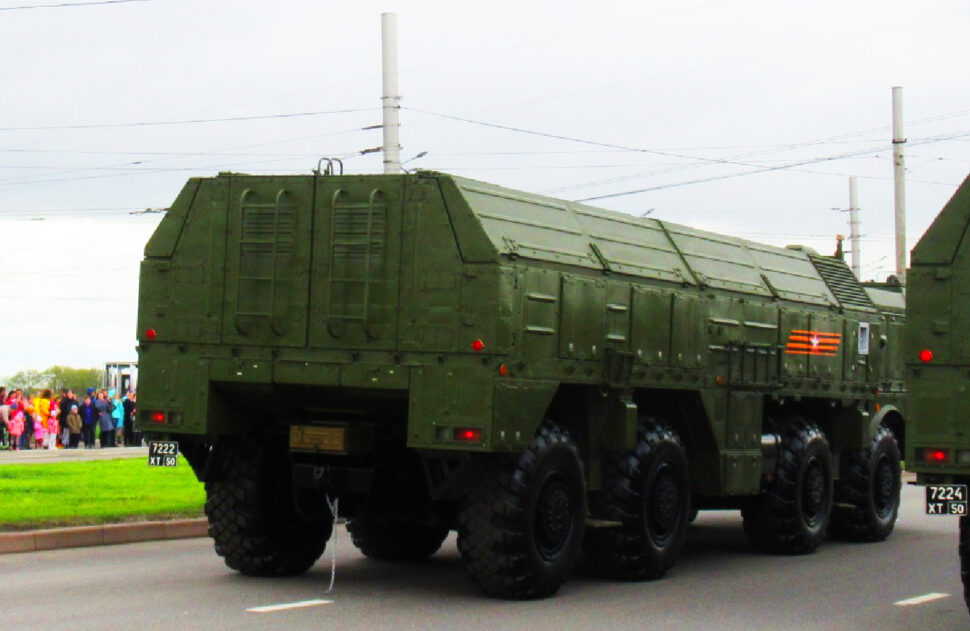
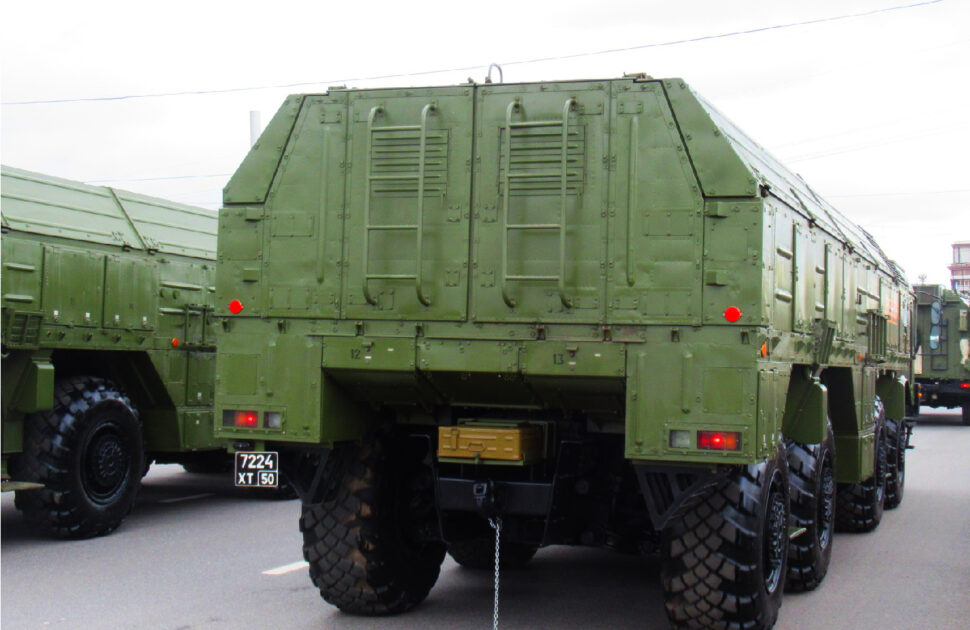
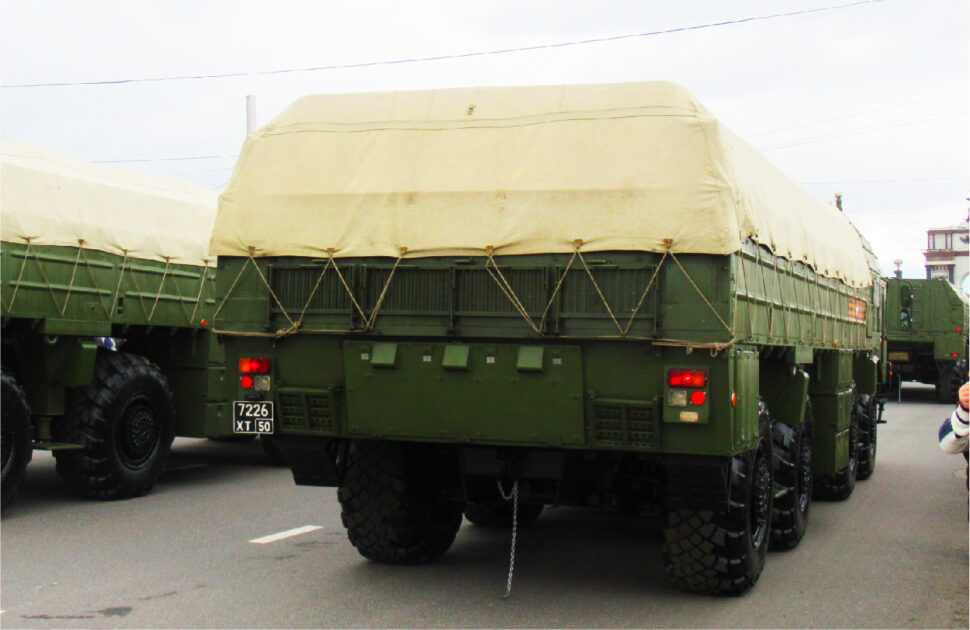
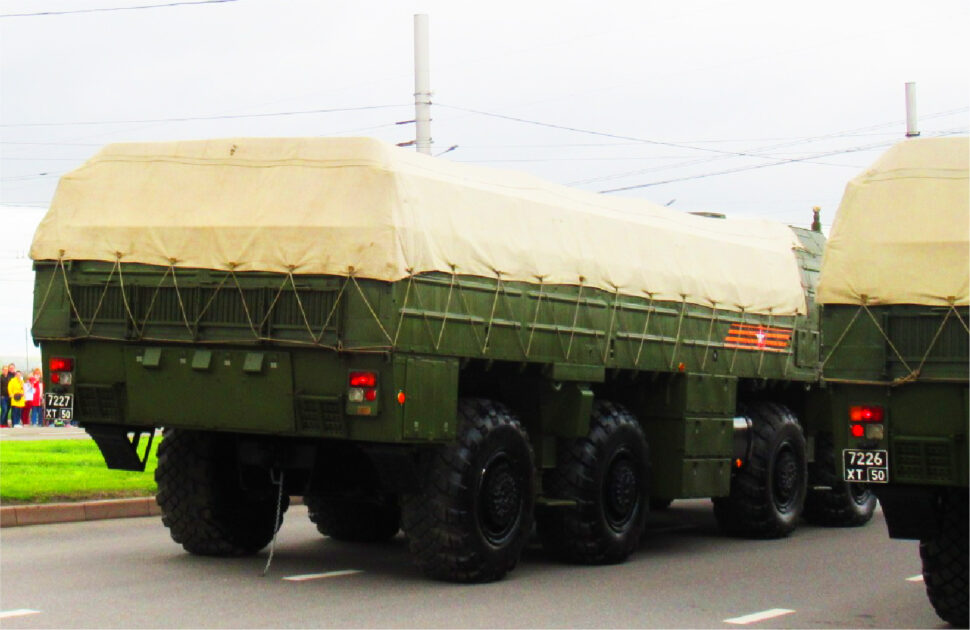
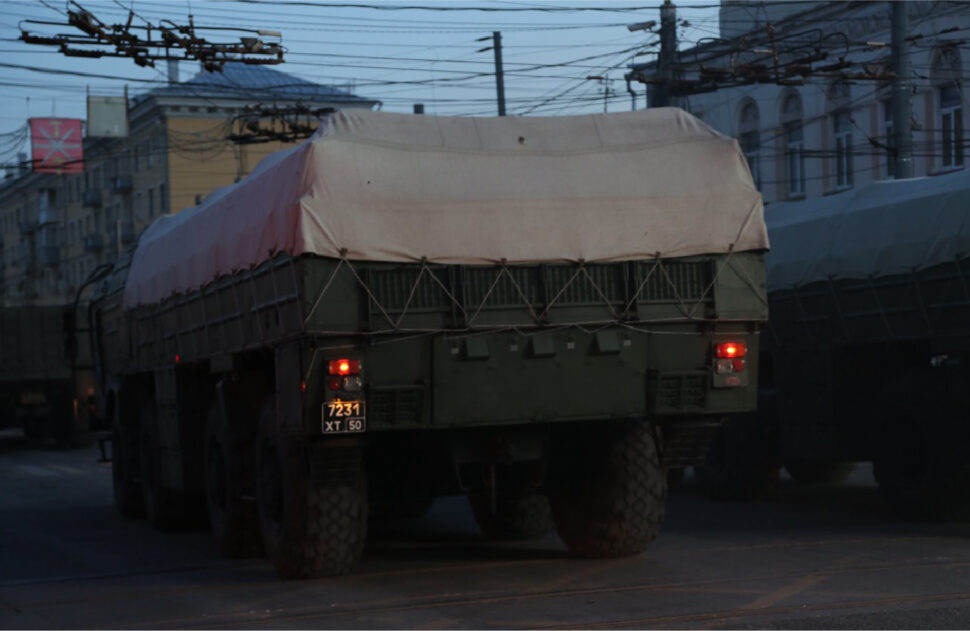
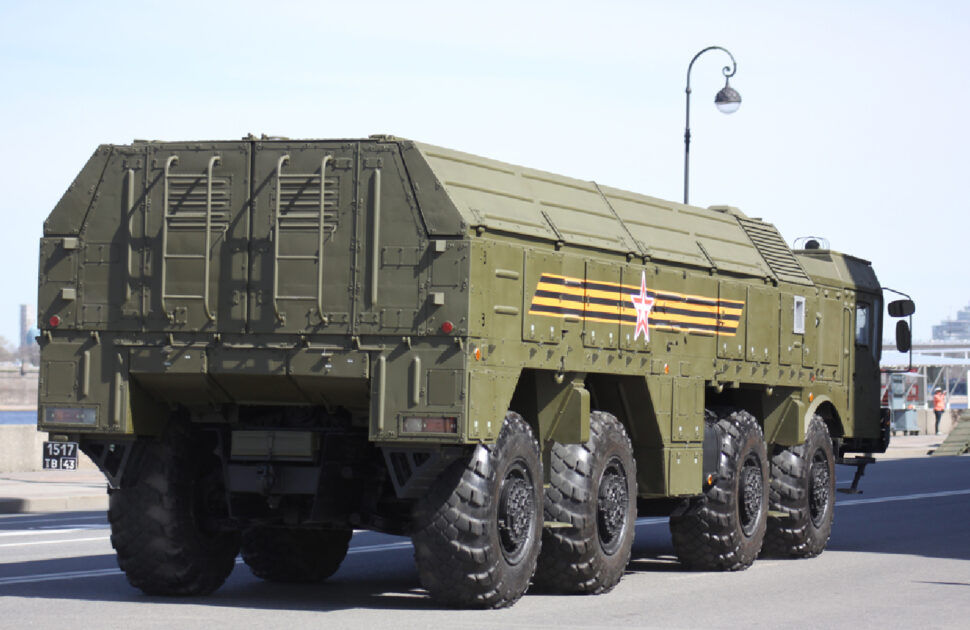
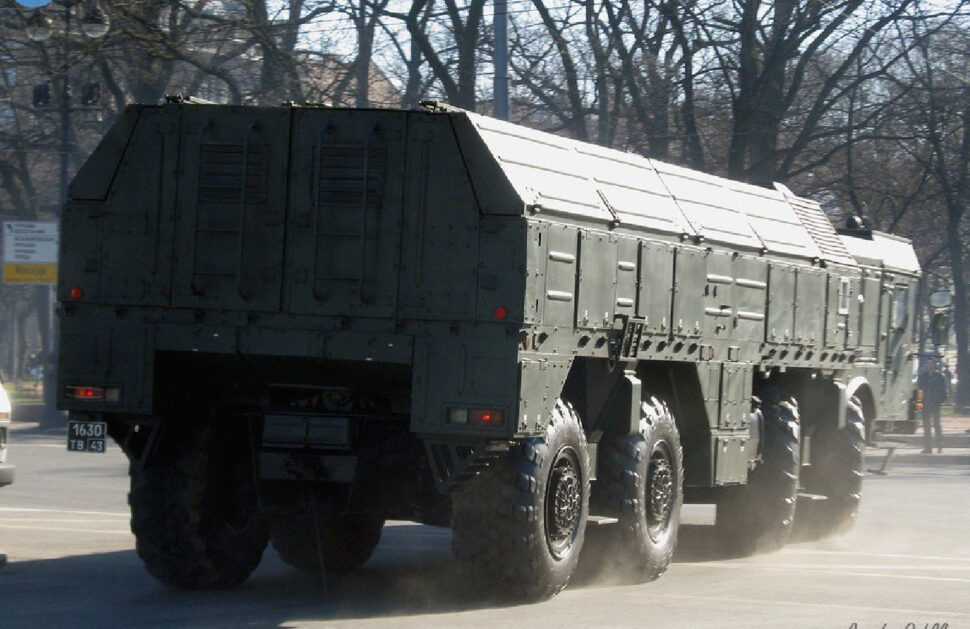
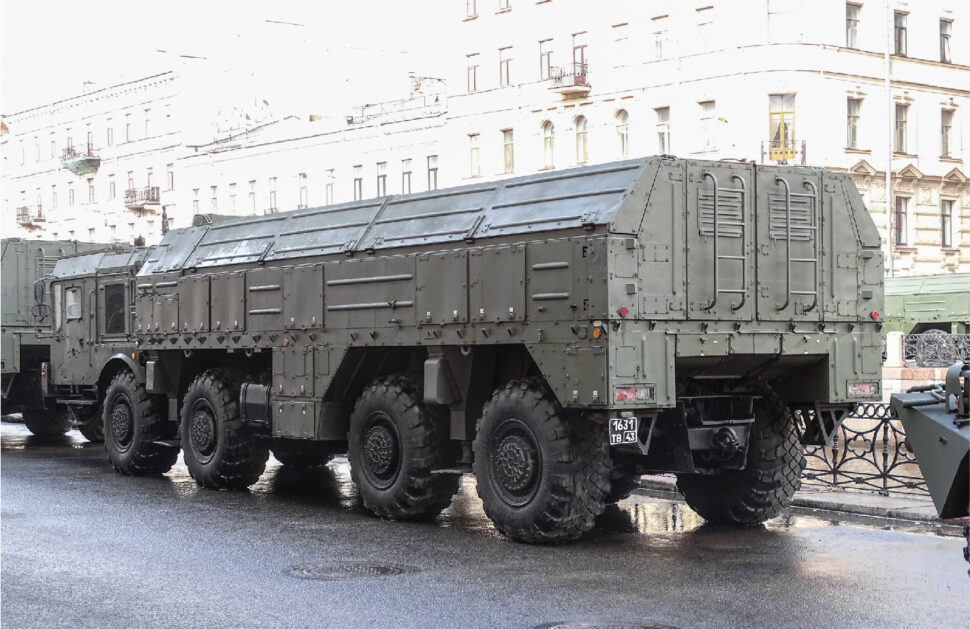
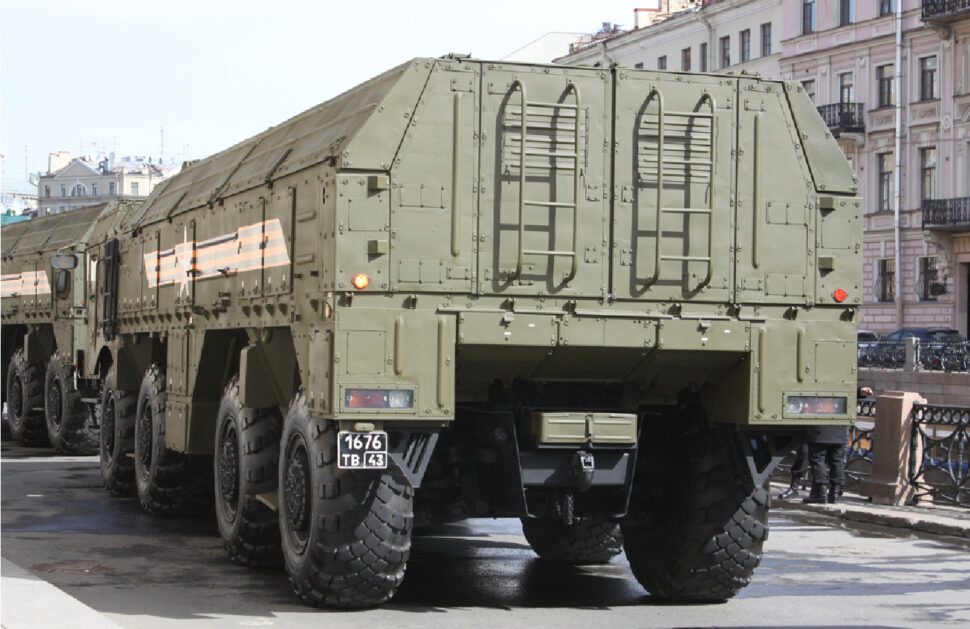
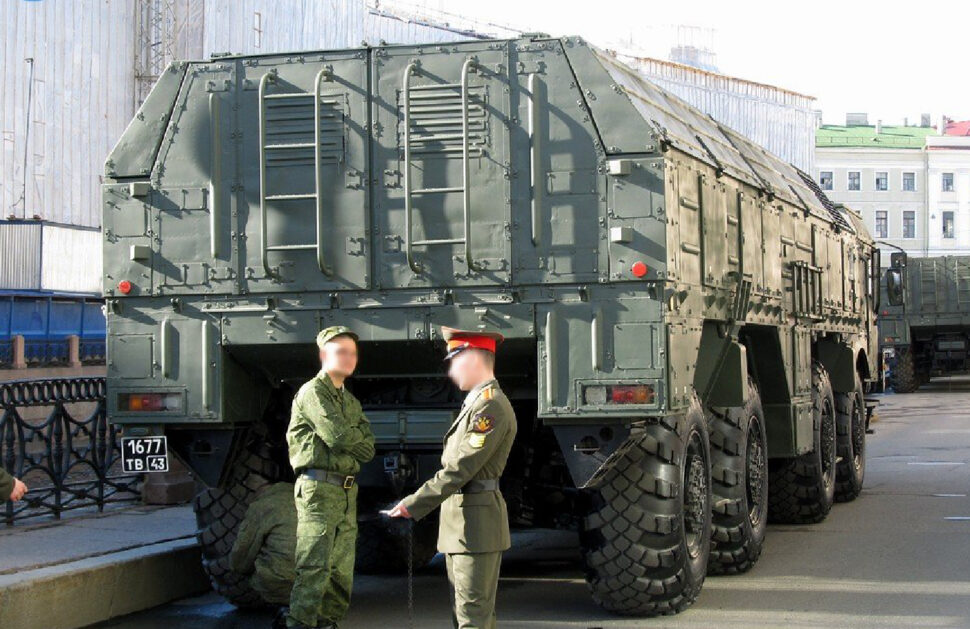
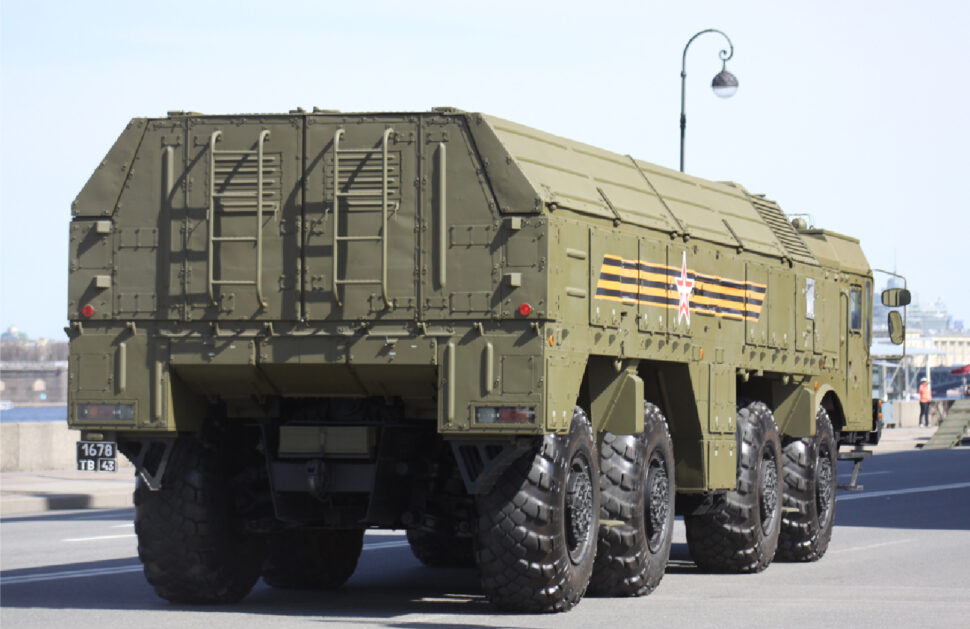
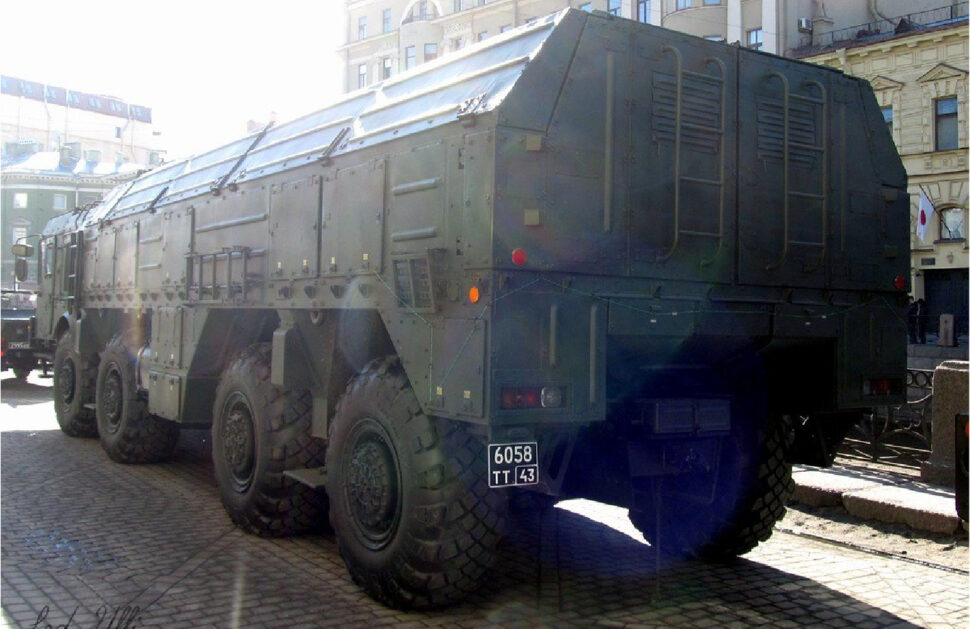
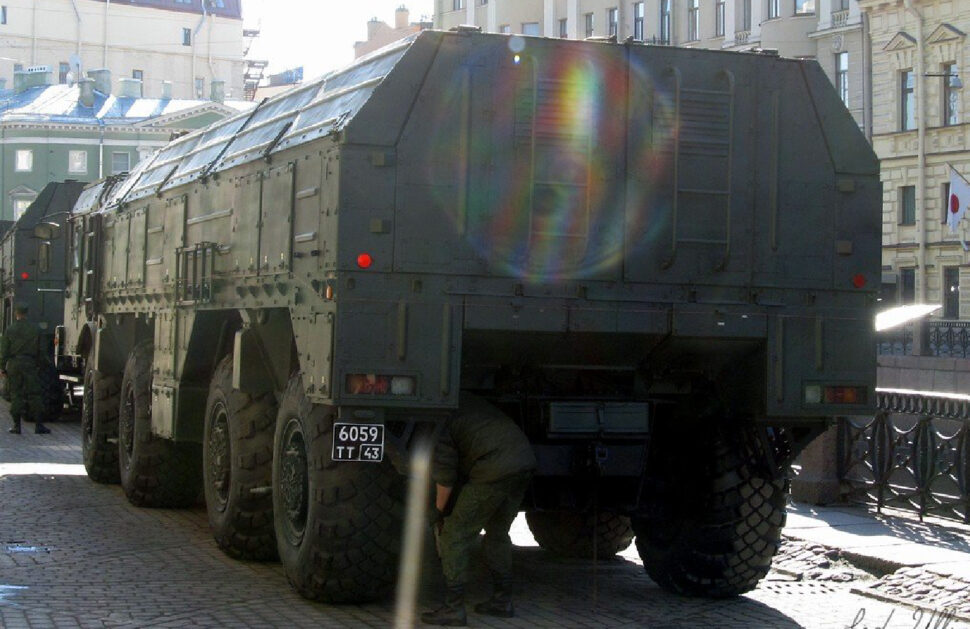
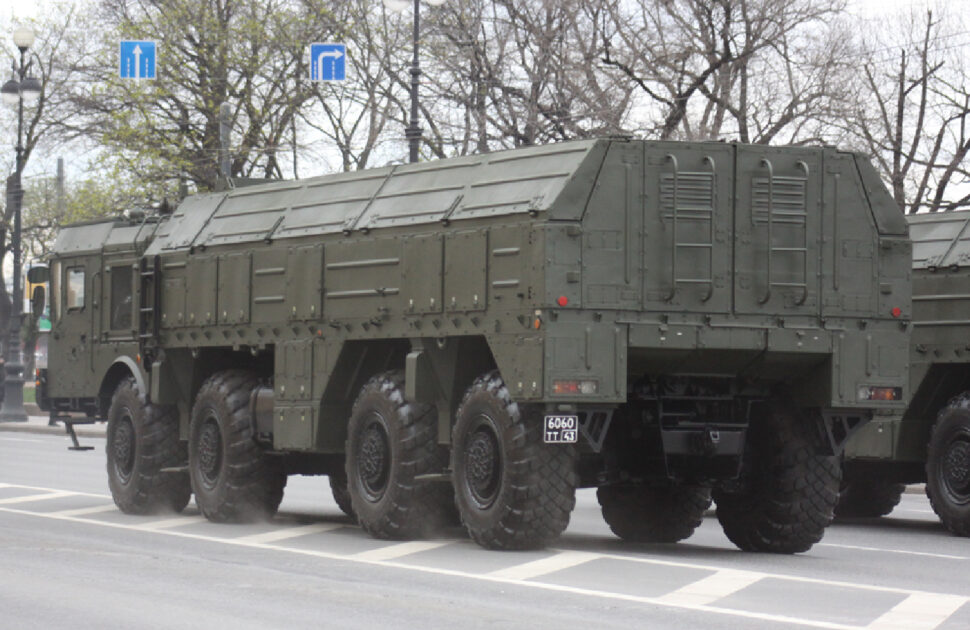
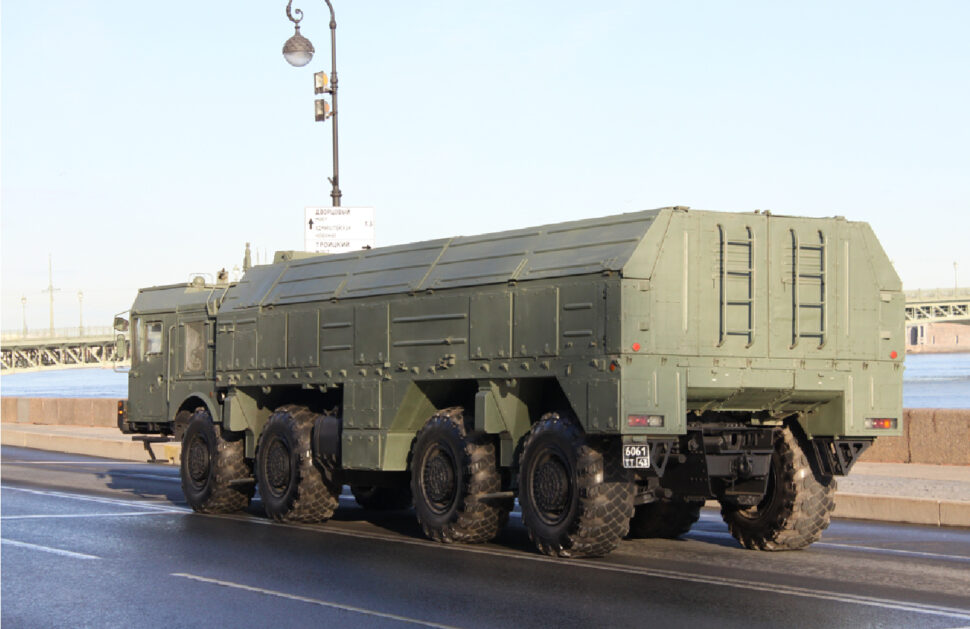
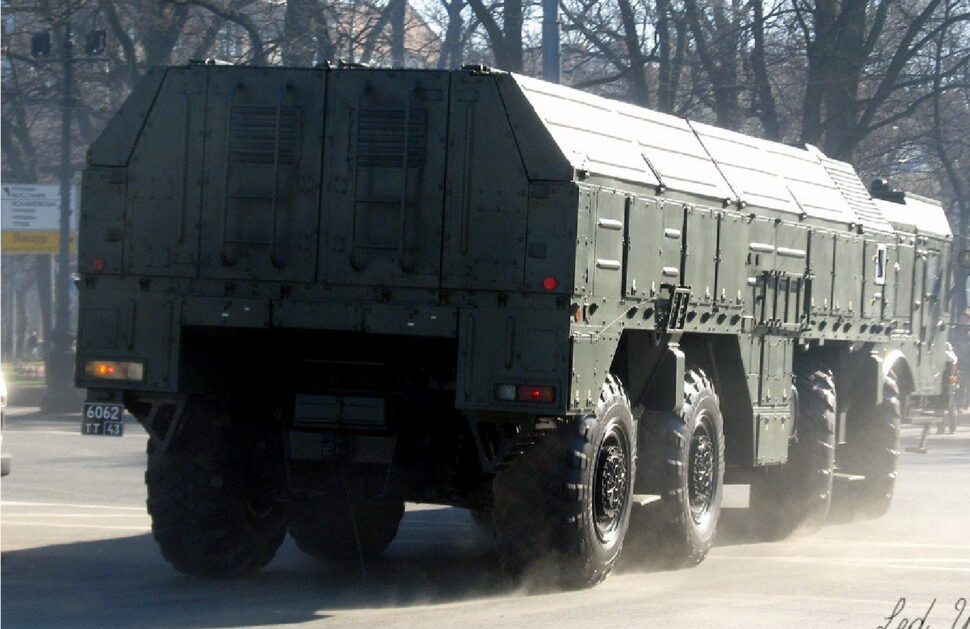
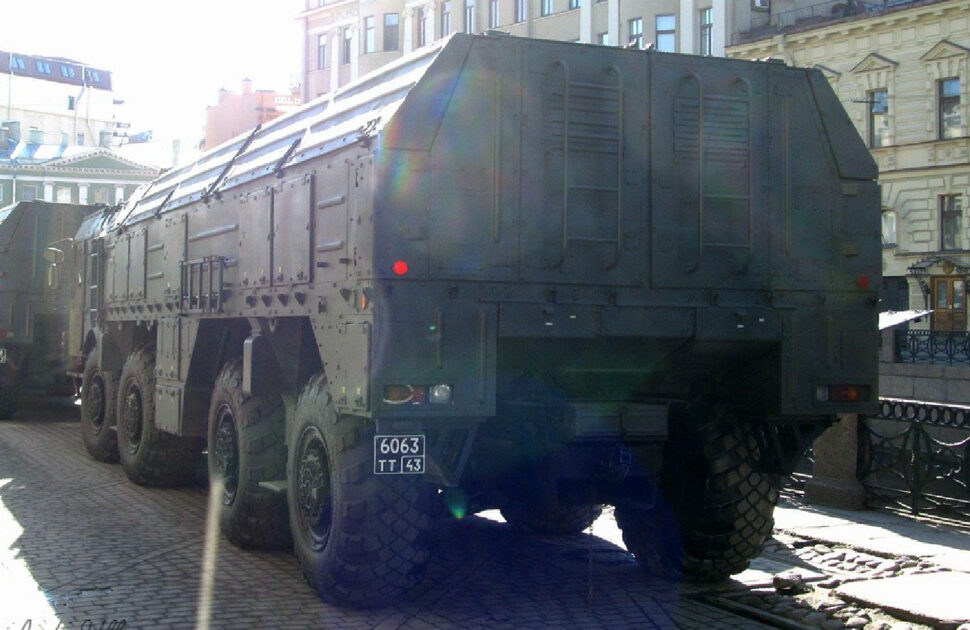
In addition, Truth Hounds identified seven SPLs and four TRVs belonging to the 448th Missile Brigade’s Iskander contingent. This was made possible thanks to the resource platesmania.com, where, knowing the make of a vehicle and at least part of its number plate, once can find a photo of it from the public domain. All of the photos of the brigade’s Iskanders were taken before 2022, mostly during military parades in Russia.
It is possible to prove that these SPLs and TRVs belong to the 448th Missile Brigade based on knowledge of the specifics of the determination of plate numbers on Russian vehicles. This missile brigade belongs to the Western Military District and the number plates of its vehicles end with the numbers ‘43’ or ‘50’. The first two digits in the licence plates of Iskander system vehicles indicate their attachment to a specific military unit. Number plates with ‘72’ at the beginning indicate the 448th Missile Brigade of the 20th Combined Arms Army of the Russian Federation.
We are publishing these photos in the hope that, in the future, they will help OSINT analysts to link specific installations to specific soldiers from this brigade, which, in turn, will simplify the establishment of direct criminal liability for specific war crimes.
26th Missile Brigade of the 6th Combined Arms Army of the Russian Federation
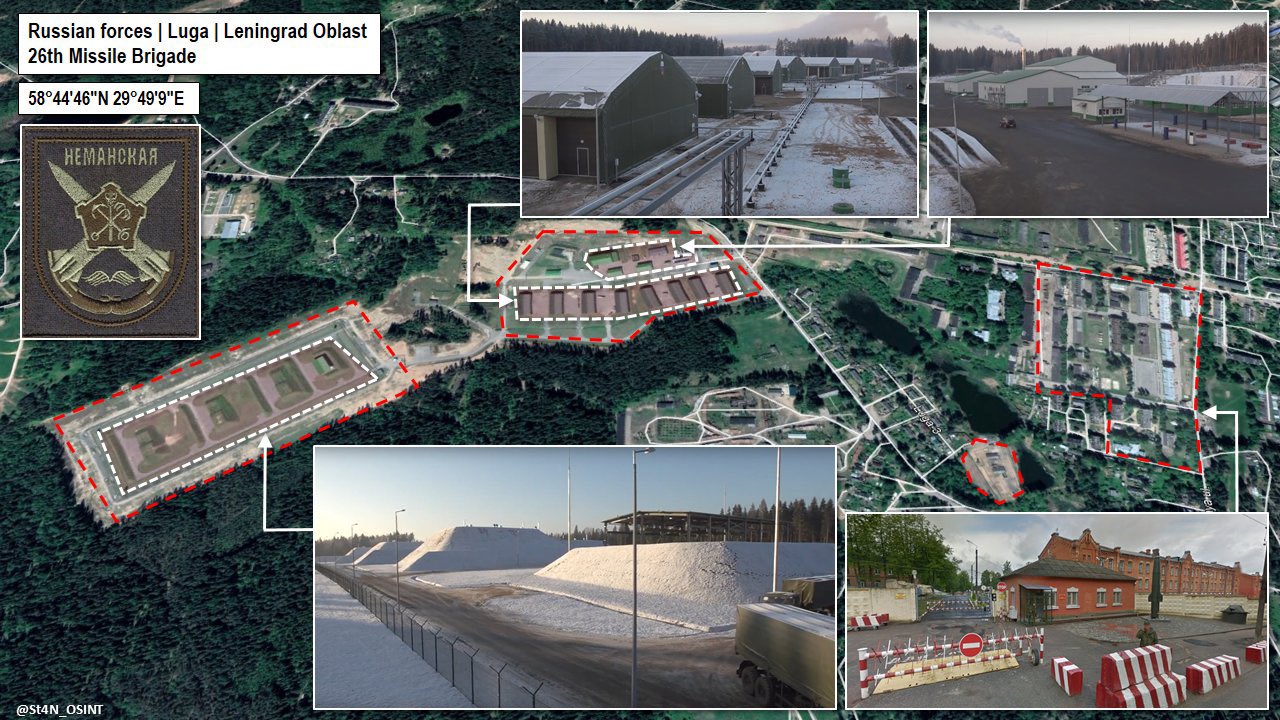
The 26th Missile Brigade (Military Unit № 54006) is stationed in the town of Luga, Leningrad Oblast. This brigade is the first one in Russia which replaced OTR-21 Tochka.
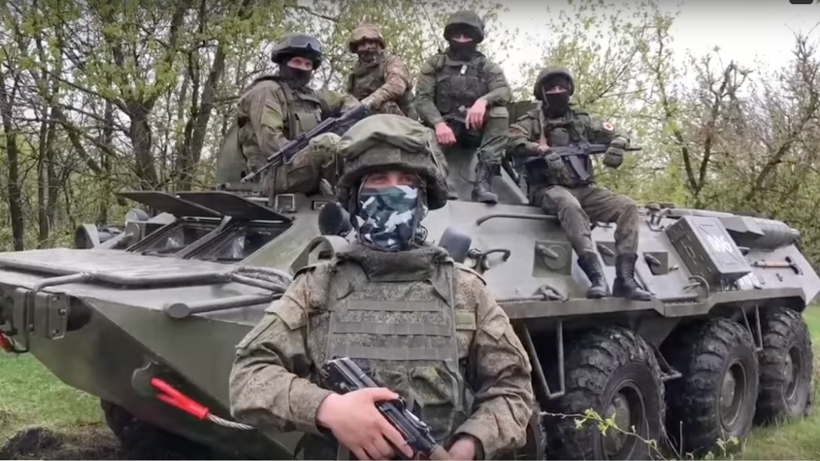
This brigade is involved in Russia’s aggression against Ukraine and its shelling of Ukrainian territory. This conclusion can be drawn from a video congratulating the soldiers of this brigade on 9 May, published in 2023. In it, the soldiers indirectly confirm their participation in the armed conflict, calling themselves ‘heroes of the “special military operation”’.
Given that the locations of those Russian missile brigades analysed above which could theoretically have been involved in the attack on Chernihiv on 19 August 2023 do not coincide with the established direction of the missile’s approach to its target on that day, we can assume that it is the 26th Missile Brigade of the 6th Combined Arms Army of the Russian Federation which is operating in the Bryansk and Kursk oblasts.
The Armed Forces of Ukraine reported shelling of northern Ukraine from the territory of these Russian regions using both cruise and ballistic Iskanders in June 2023 and, towards the end of August 2023, a representative of Ukrainian Defence Intelligence stated that Iskander brigades were located along the entire Ukrainian border.
These statements are confirmed by satellite images of the territory of Bryansk Oblast close to the village of Olenivka (coordinates: 52.831, 32.791 and 52.817, 32.778) dated 28 January and 1 February 2023, obtained by Truth Hounds investigators. Iskander firing positions can be seen in them.
A Planet satellite image from 07:58 UTC on 1 February 2023, showing Iskander firing positions in Bryansk Oblast (coordinates: 52.831, 32.791)
A Planet satellite image from 12:04 UTC on 1 February 2023, showing Iskander firing positions in Bryansk Oblast (coordinates: 52.831, 32.791)
A Planet satellite image from 28 January 2023, showing possible Iskander firing positions in Bryansk Oblast (coordinates: 52.817 32.778)
We also managed to find other evidence of the combat deployment of the 26th Missile Brigade in the Bryansk and Kursk oblasts. However, due to the sensitivity of this data and our unwillingness to harm the interests of the official investigation, we cannot make it public. All information gathered by Truth Hounds investigators has been passed on to Ukrainian law enforcement agencies in full.
Iskanders of the 26th Missile Brigade
We have managed to identify all of the Iskander ballistic missile systems of the 26th Missile Brigade. The brigade also belongs to the Western Military District of the Russian Federation, which means that the licence plates on its vehicles also end in ‘43’ or ‘50’. As noted earlier, the first two digits of an Iskander vehicle’s licence plate indicate the unit to which it belongs. These two digits are usually the same for all Iskanders belonging to the same brigade. However, the number plates of the 26th Missile Brigade may begin with three different numbers: ‘15’, ‘16’, and ‘60’. This is due to the fact that the Iskander system was delivered to the brigade in batches and, in some cases, the number plates from Tochka-U missile launchers were transferred to the Iskanders which replaced the former in the brigade’s arsenal.
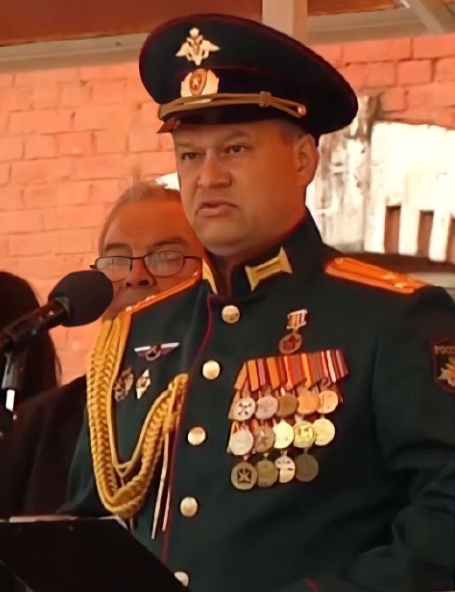
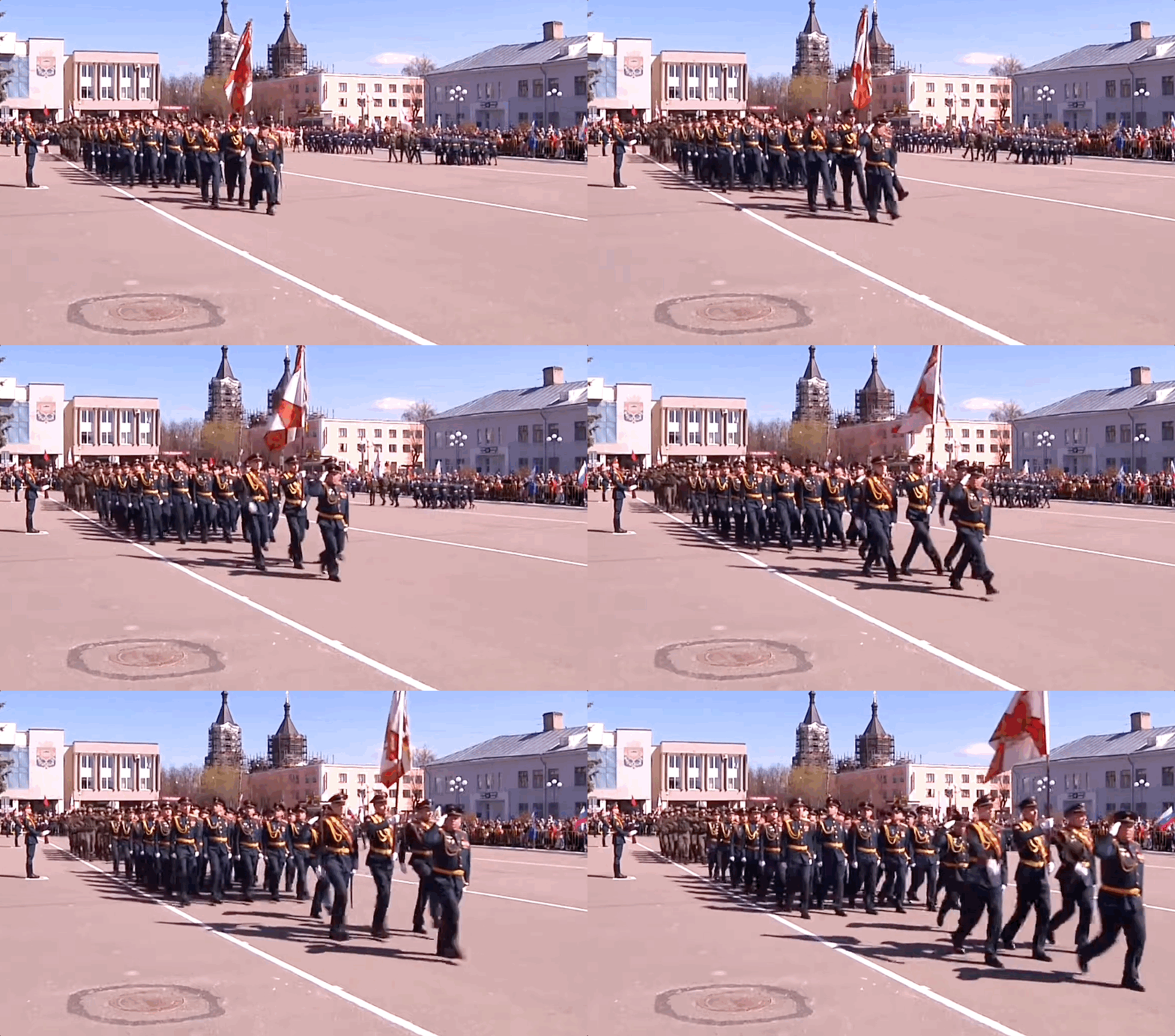
With the help of OSINT, we have identified a significant portion of the personnel of the 26th Missile Brigade, including its command, which most likely gave the order to attack Chernihiv on 19 August 2023.
For example, the commander of the 26th Missile Brigade is Colonel Pavel Rusakov. Some of his personal details are listed below:
We have provided more detailed information about the personnel of the military units, their commanders and personal data to the pre-trial investigation authorities.
For those who likes armoured warfare-themed video games: World of Tanks account: capelfimov@yandex.ru (password: 123789qaz). To get an up-to-date list of upgraded tanks and crew talents, please contact us.
We have also managed to obtain the full names of the personnel of other units of the mentioned brigade, which can be viewed here.