
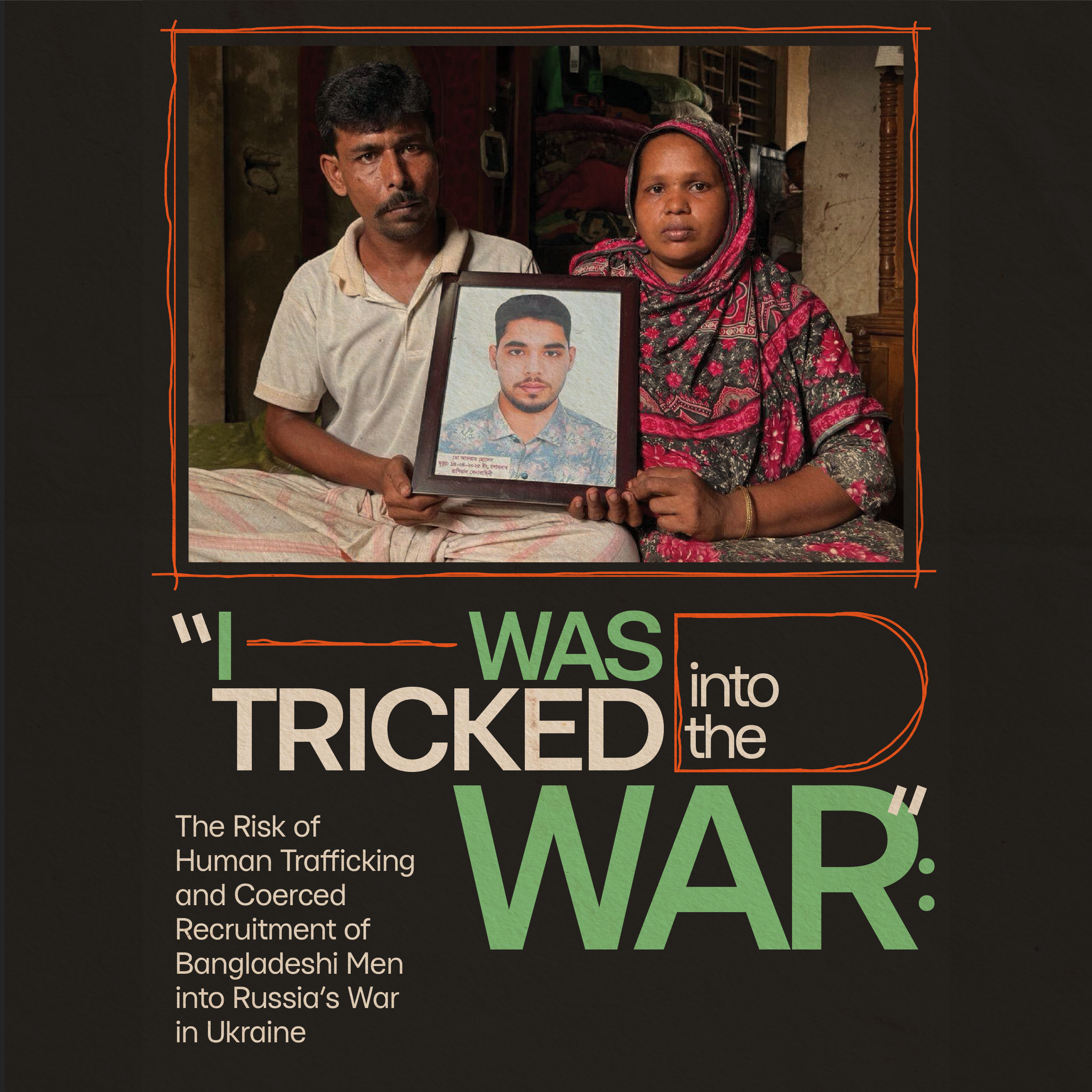
Russia’s full-scale invasion of Ukraine in 2022 continues to threaten global peace and security. Recruitment brokers are drawing men from Asia, Africa, and elsewhere into the Russian Armed Forces, often under false pretenses, promising civilian or non-combat jobs. Bangladeshi men are among those recruited—often under false promises of civilian jobs abroad—only to be transported to Russia and sent into live combat, in what may amount to human trafficking under international law.
The new report by Truth Hounds and Fortify Rights shows how brokers use deception, coercion, and abuse to recruit Bangladeshi men into the Russian Armed Forces, and then into the war in Ukraine, including into deadly battles on the frontlines of the conflict. Lured by fraudulent job offers and transported through third countries, many signed contracts in the Russian language they could not read and were swiftly transferred to military facilities in Russia, where they were forced into combat roles supporting Russia’s war of aggression in Ukraine.
Between May 2025 and February 2026, Fortify Rights and Truth Hounds conducted 24 interviews in Bangladesh and Ukraine, including with Bangladeshi men recruited into the Russian Armed Forces, trafficking survivors, families of those killed in the war in Ukraine, anti-trafficking service providers, and Bangladeshi police. Truth Hounds also interviewed four Nepali and Sri Lankan prisoners of war in Ukraine and communicated with Ukrainian authorities responsible for overseeing prisoners of war and tracking foreign mercenary-style recruitment.
This report does not conclude that all foreign fighters in the Russian army are victims of human trafficking; however, our evidence strongly indicates the existence of deceptive recruitment practices and human trafficking among Bangladeshi nationals involved in the Russian Armed Forces.
“Not all foreign fighters in this war are victims or have been trafficked, but Ukraine should ensure that all foreign nationals held as prisoners of war are screened for human trafficking and protected accordingly,” said Maria Tomak, Engaged Researcher at Truth Hounds. “Prisoner-of-war status does not erase victimhood.”
While the report is mostly focused on Bangladeshi recruits, its findings and recommendations are relevant to Russia’s broader abusive recruitment practices in Africa, Asia, the Middle East, and Central Asia.
The report provides recommendations to:
- The Government of Russia to end deceptive recruitment practices, investigate trafficking networks, and comply with its obligations under international law.
- The Government of Bangladesh to intensify efforts to dismantle trafficking syndicates, hold perpetrators accountable, strengthen safe migration systems, provide comprehensive support to survivors and their families, and publicly condemn Russia’s aggression.
- The Government of Ukraine to work with anti-trafficking organisations to screen foreign prisoners of war for trafficking and ensure access to protection mechanisms.
- U.N. agencies and anti-trafficking organisations to urgently recognise and address the transnational trafficking crisis linked to a war of aggression by Russia.